
The Truthear Hexa ($79.99 / ~₹6,999) delivers reference-grade tonal accuracy, transparent vocal midrange, and pinpoint stereo imaging that rivals multi-driver in-ear monitors well above its price tag. However, its broad 6.4 mm nozzle and polite mid-bass mean it will not suit dedicated bassheads or listeners with narrow ear canals.
In the budget audio world, aggressive V-shaped curves and bass-boosted tunings dominate store shelves. When Truthear launched the Hexa, community forums and audiophile circles immediately labeled it a disruptive release, with many even calling it a “mini Moondrop Blessing 2” at a fraction of the cost.
Hype is easy to manufacture, but living with an in-ear monitor every day tells the real story. To test whether the Hexa justifies its reputation, I set aside my regular audio gear and used the Truthear Hexa as my sole daily driver for 7 consecutive days. I pushed it through critical analytical listening, vocal-heavy acoustic sessions, long work calls, and fast-paced competitive gaming.
Truthear Hexa Specifications
Behind the faceplate sits a multi-driver hybrid setup typically reserved for higher price tiers:
| Configuration | Hybrid 1DD + 3BA (4 drivers per side) |
| Bass Driver | 10 mm Dynamic Driver with a polyurethane (PU) + liquid crystal polymer (LCP) composite diaphragm |
| Midrange Drivers | Custom dual balanced armature composite |
| Treble Driver | Custom high-frequency balanced armature |
| Crossover | 3-way RC acoustic-electric network with DLP 3D-printed independent sound conduits |
| Impedance | 20.5Ω @ 1kHz |
| Sensitivity | 120dB/Vrms @ 1kHz |
| Interface | 0.78 mm 2-Pin flush connector |
| Termination | 3.5 mm single-ended stereo |
| Nozzle Diameter | ~6.4 mm at the widest lip |
Pros
Cons
Build Quality
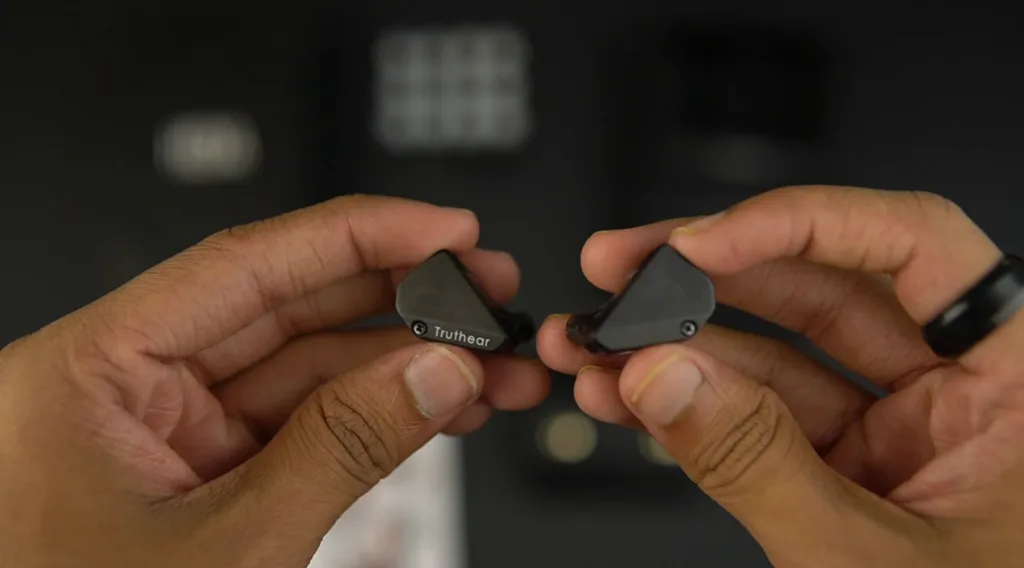
Shell Design and Aesthetic
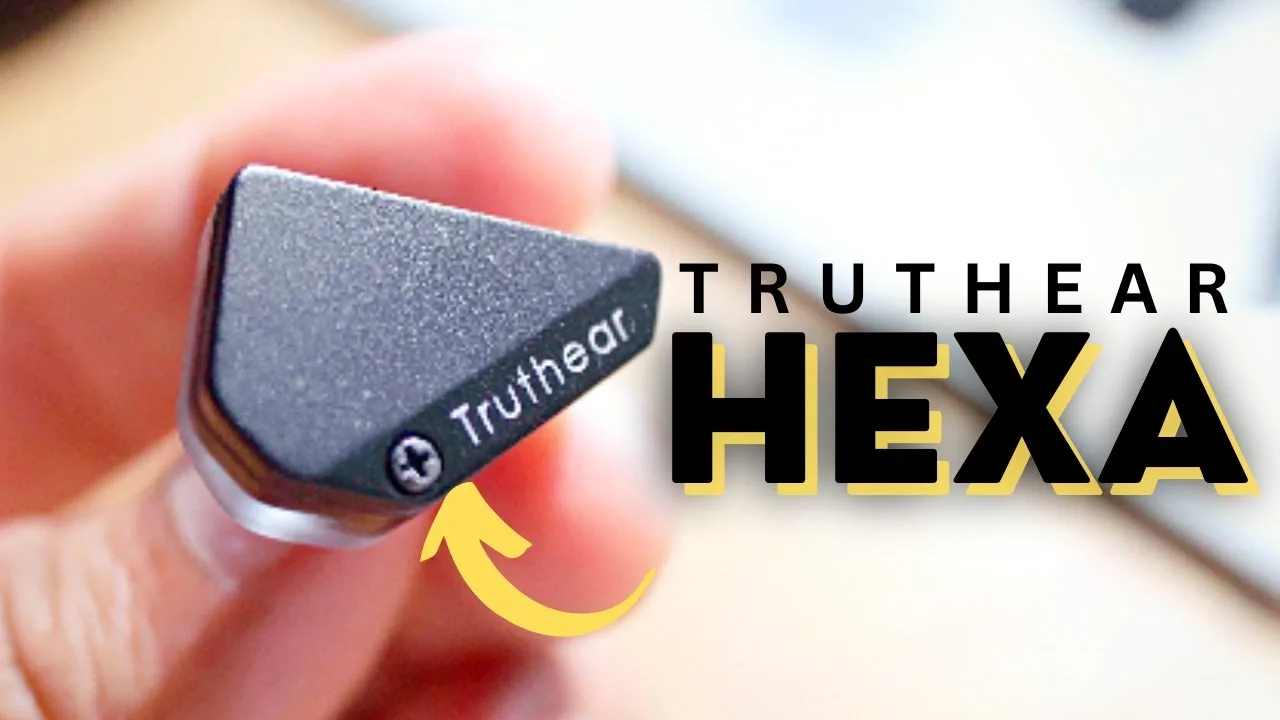
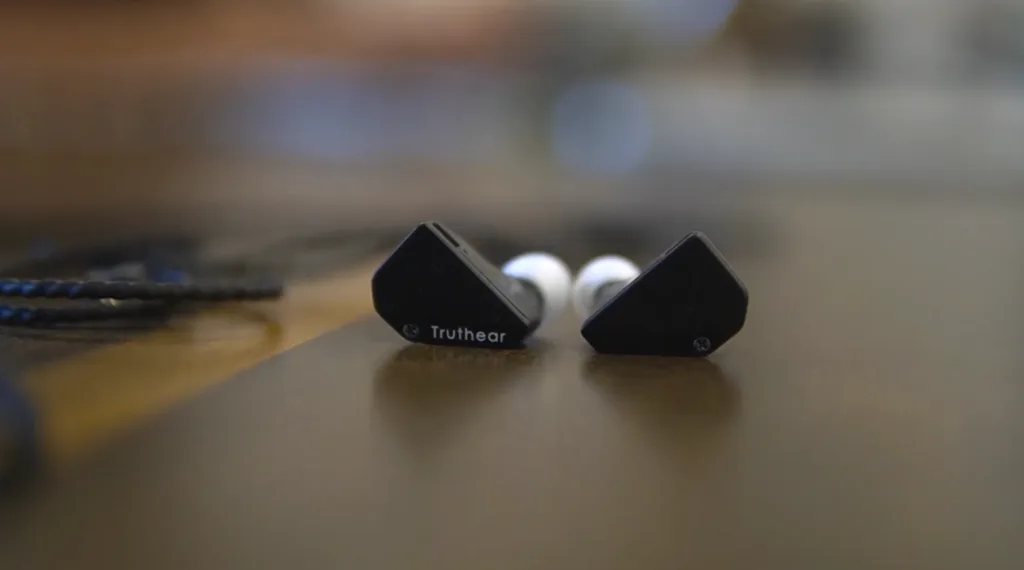
The Hexa’s shells are crafted in partnership with 3D-printing manufacturer HeyGears. Made from medical-grade, semi-translucent dark resin, they let you inspect the internal dynamic driver and discrete acoustic wave tubes leading up to the nozzle. The matte-black aluminum faceplate is secured with a micro-screw, giving the IEM an understated, industrial look free of ostentatious branding.
The 6.4 mm Nozzle: Day-by-Day Adjustment
The most critical physical factor is the nozzle width:
- Days 1 & 2: Using the pre-installed medium silicone tips, I felt noticeable pressure on the cartilage of my ear canal after roughly 40 minutes of continuous listening. The lack of an aggressive retention ring lip also means the tips rely mostly on friction to stay in place.
- Days 3 to 7: I switched to the included small silicone tips, and then to the stock memory foam tips. The foam compressed evenly, providing an airtight acoustic seal without causing local cartilage soreness.
Tip: If you have narrower ear canals, plan to experiment with third-party tips with soft, flexible stems (such as SpinFit CP155 or Dunu S&S) for long-term comfort.
Cable & Protective Case
Truthear clearly kept costs low on the peripheral packaging:
- The Cable: The stock 4-strand twisted black cable is lightweight, but it is thin, prone to coiling, and transfers mild microphonic friction noise through your clothing when you move around.
- The Case: The supplied leatherette pouch with snap closures looks smart, but it offers zero impact or crush protection inside a laptop bag. Upgrading to a small $5 hardshell zippered case is well worth it.
Sound Quality
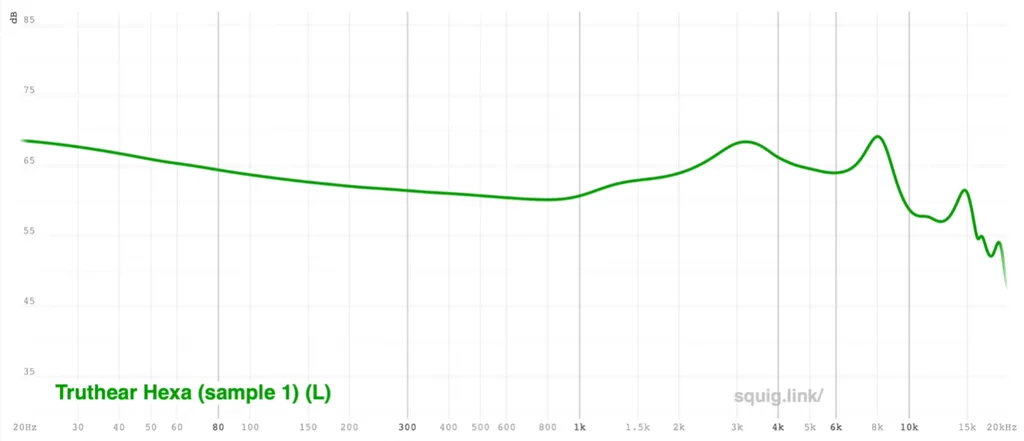
The Truthear Hexa is tuned to an uncolored, diffuse-field-inspired target with elevated sub-bass, aligning closely with modern “meta” target curves.
Bass: Controlled Speed Over Room-Shaking Slam
The low frequencies are governed entirely by the 10 mm dynamic driver:
- Sub-Bass: The sub-bass shelf extends down to 20Hz with fast transient decay and distinct texture. When a track contains low sub-frequencies, the Hexa delivers clean, vibration-free rumble.
- Mid-Bass: Deliberately lean. Kick drums and rhythm basslines remain clear and separated, but they lack heavy, chest-thumping impact.
- The Verdict on Bass: This tuning guarantees zero bass bleed into the vocals. However, if your playlist centers on modern club EDM, hardstyle, or boom-bap hip-hop, you may find the low end too polite.
Midrange: The Uncolored Reference Standard
The midrange is where the Hexa establishes its class-leading position:
- Vocal Reproduction: Male and female vocals sit directly in the center of the soundstage. In acoustic and vocal-forward tracks—such as The Local Train’s Choo Lo—voices sound lifelike, intimate, and free of chesty mud or shouty upper-mid glare.
- Timbre: Cheaper multi-driver hybrids often suffer from a sterile, metallic “BA timbre.” Truthear’s acoustic dampening manages this transition cleanly; cellos, grand pianos, and clean electric guitars carry natural harmonic decay.
Treble: Crisp Extension Without Fatigue
Handling the highs with a dedicated custom BA gives the Hexa balanced treble extension:
- Hi-hats, acoustic guitar harmonics, and ride cymbals ring out with realistic air and sparkle without crossing into harsh sibilance (“s” and “t” spikes).
- Resolution comes from driver speed and acoustic separation rather than artificially boosted treble, allowing multi-hour listening sessions without ear fatigue.
Technical Performance & Gaming
Imaging and Instrument Separation
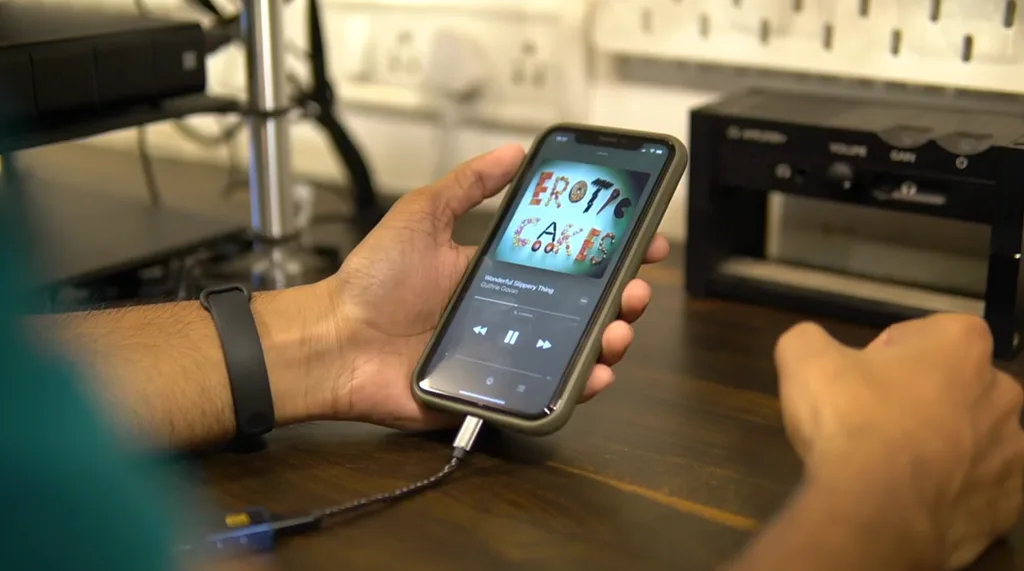
Positional accuracy is elite for an in-ear monitor under $100. During complex instrumental passages—such as Guthrie Govan’s Wonderful Slippery Thing—tracking independent panning guitars, tight bass lines, and subtle drum fills across horizontal planes was effortless. Every instrument occupies its own acoustic pocket.
Soundstage
The soundstage is intimate rather than expansive. It delivers an inside-the-head monitor presentation rather than an airy, out-of-head holographic field. However, because layering and instrument isolation are so strong, the sound never feels congested or cluttered.
Tactical FPS Gaming Performance
In competitive shooters (Valorant, CS2, Apex Legends), the Hexa excels:
- The lean mid-bass ensures environmental explosions and heavy gunfire don’t mask critical tactical audio.
- Enemy footstep directions, tactical reload cues, and weapon switches come through with surgical spatial accuracy.
- Note: In single-player cinematic games, the restrained bass rumble may reduce the dramatic impact of large-scale set pieces.
Amplification & Source Pairing
With a 20.5Ω impedance and 120dB/Vrms sensitivity, the Hexa is efficient and runs cleanly off virtually any source:
- Standard Dongles (e.g., Apple USB-C Dongle): Supplies ample power, clean volume levels, and a pitch-black background with no noticeable hiss.
- Dedicated DAC/Amps: Stepping up to a dedicated portable DAC/Amp slightly tightens sub-bass response and marginally improves dynamic contrast. Still, you don’t need expensive equipment to get optimal performance.
Should You Buy the Truthear Hexa?
After seven days of daily use, the Truthear Hexa lives up to its reputation. It avoids tuning gimmicks in favor of genuine acoustic fidelity, resolving power, and accurate timbre. If you value musical honesty, crystal-clear vocals, and precise competitive imaging, it remains one of the smartest purchases in the sub-$100 IEM space.
- Buy it if: You want a mature, neutral reference signature for analytical listening, acoustic or rock genres, vocal clarity, or pinpoint directional gaming audio.
- Skip it if: You crave heavy mid-bass rumble, prefer a warm, forgiving sound for low-bitrate recordings, or have narrow ear canals that cannot comfortably fit a wide nozzle.
FAQs
No. A standard Apple USB-C dongle or cheap DAC gives plenty of volume and clean sound.
You likely don’t have an airtight seal. Try the included foam tips or smaller silicone tips so the nozzle sits properly in your ear canal.
Yes. Its clean mid-bass and pinpoint imaging make hearing footsteps and reload cues very easy in games like Valorant and CS2.
SpinFit CP155 or Dunu S&S. Both fit the wide 6.4 mm stem and relieve canal pressure.
Yes. Adding a +3dB to +5dB bass boost in apps like Wavelet gives it plenty of punch without distorting the sound.
Get the Hexa for detail, vocal clarity, and competitive gaming. Get the Zero: RED if you want more bass slam and a fun, warmer sound.