
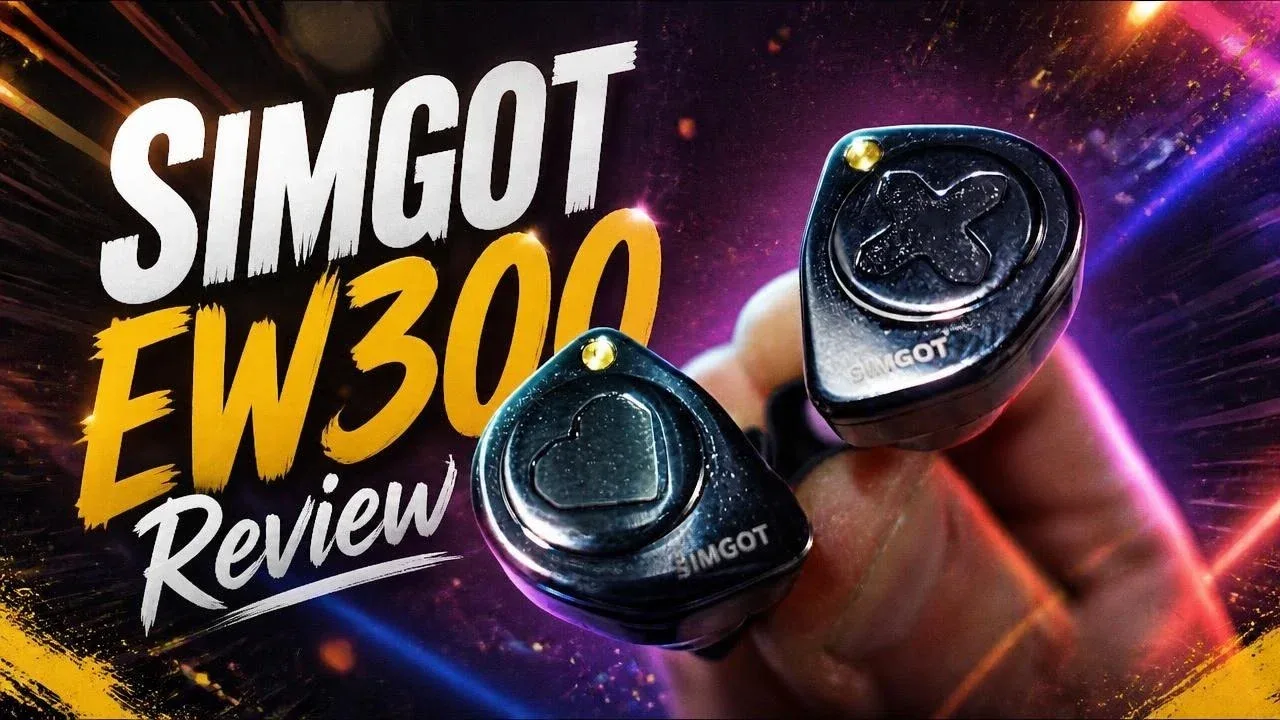
The Simgot EW300 costs between $77.39 and $91.99 depending on the variant, and I spent the last two weeks using both the standard 3.5mm model and the USB Type-C DSP version for daily commutes, rock and hip-hop playlists, and ranked matches in Counter-Strike 2 and Valorant. If you found the older Simgot EW200 too bright and want a warmer, bass-heavy sound with customizable tuning nozzles, buy this set. However, if you have small ear canals or play competitive tactical shooters where judging exact footstep distance is your top priority, skip it and look at the Truthear Hexa instead. Here is my full breakdown.
Quick Specifications
Before getting into the detailed testing notes, here is a quick overview of where the Simgot EW300 succeeds and where it falls short during daily use.
How I Tested the Simgot EW300
With an impedance of 28 ohms and a high sensitivity of 121 dB/Vrms, the Simgot EW300 doesn’t need an expensive desktop amplifier. I ran most of my portable music sessions directly from my Samsung Galaxy S10e headphone jack, an Apple USB-C dongle, and a desktop DAC connected to my PC.
I kept my volume comfortably between 25% and 30% on both my phone and PC. Pushing the volume past 40% gets dangerously loud, while dropping below 15% causes the sub-bass to thin out.
To test both tuning nozzles and the included foam dampers, I used a fixed rotation of tracks across different genres:
- Hip-Hop & EDM: In Da Club by 50 Cent and Tangerine Rays by Zeds Dead (testing sub-bass rumble and mid-bass bleed).
- Vocals & Pop: When We Were Young and Chasing Pavements by Adele (checking for upper-midrange shoutiness and sibilance around 3kHz to 4kHz).
- Rock & Orchestral: Shoot to Thrill by AC/DC, Test Drive by London Music Works, and the main theme from Alfie performed by the Danish National Symphony Orchestra (testing instrument separation, stage width, and treble timbre).
- Competitive Gaming: 15 hours split between Counter-Strike 2 and Valorant to evaluate directional audio and inline microphone clarity.
Build Quality, Fit & Cable
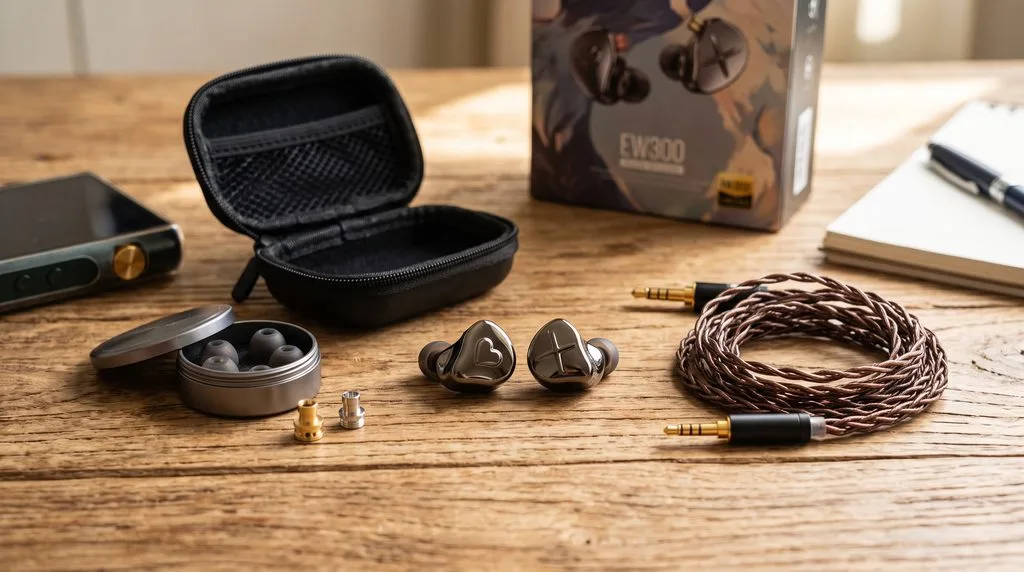
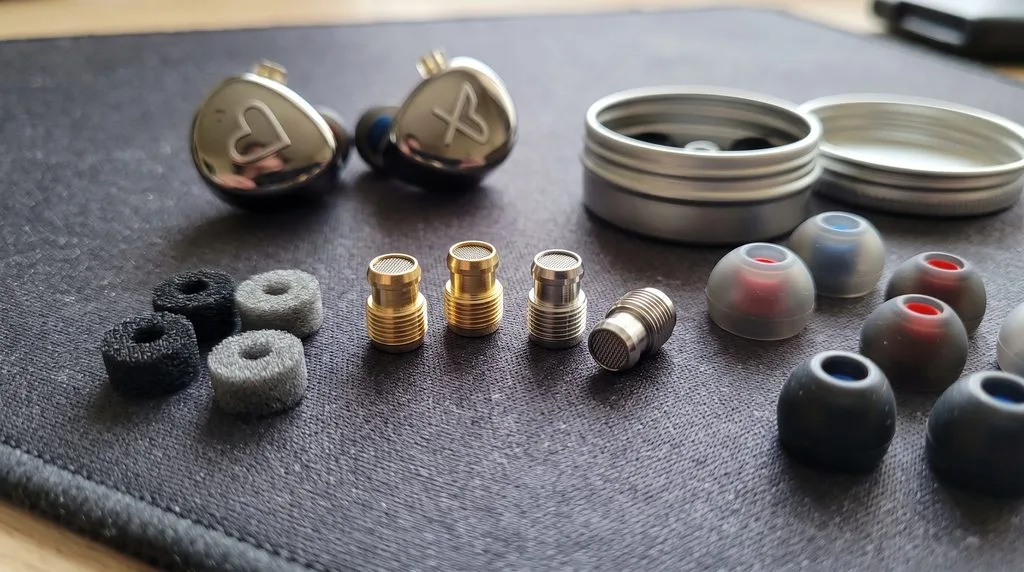
Inside the box, you get the earphones, a structured zippered carrying case with a soft inner lining, three pairs of standard silicone ear tips (Small, Medium, Large), a 0.78mm 2-pin silver-plated oxygen-free copper cable, two sets of tuning nozzles, spare rubber O-rings, and tiny circular damping foams. There are no memory foam ear tips included in the box.
Shell Design & The Three Variants
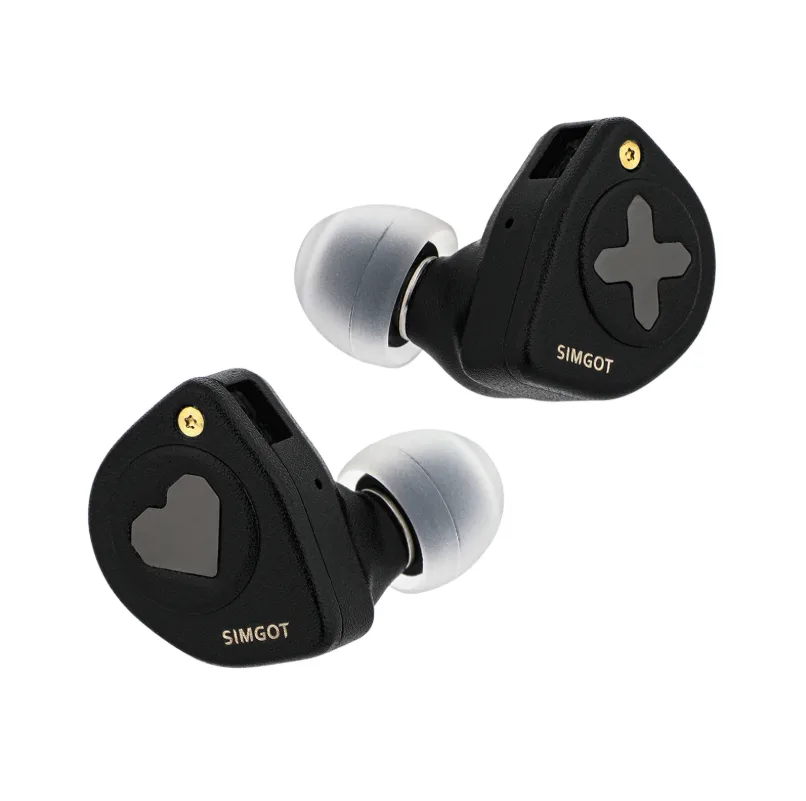
The shells are machined from solid metal and carry over the compact footprint of the older Simgot EW200, measuring roughly 16mm at the top width, 12mm at the bottom taper, and 9.3mm in depth. Because the housings are pure metal, I recommend keeping a small silica gel packet inside the carrying case to prevent moisture buildup if you live in a humid climate.
Simgot sells three versions of this IEM:
- Standard Edition ($79.99): Comes with a mirror chrome silver finish and a 3.5mm plug. While it resists scratches well, the shiny surface holds onto fingerprints and skin oils immediately.
- HBB Edition ($77.39, discounted from $85.99): Uses the same 3.5mm analog setup but swaps the chrome look for a matte black finish. Because of the current discount, it is actually cheaper than the standard chrome version.
- DSP Edition ($91.99): Features the matte black powder-coated finish alongside a USB Type-C cable with a built-in DAC chip and inline microphone. I prefer the matte black shells on the DSP version because they never look greasy after a long session.
Comfort & The 6.2mm Nozzle Issue
During the first 45 minutes of wearing the Simgot EW300, the fit felt secure and lightweight—I barely had to readjust them during ranked matches. However, once I crossed the 60-minute mark, two physical design choices started causing discomfort:
- First, the shell has a slightly pointed back edge that pressed directly against the antihelix of my left ear.
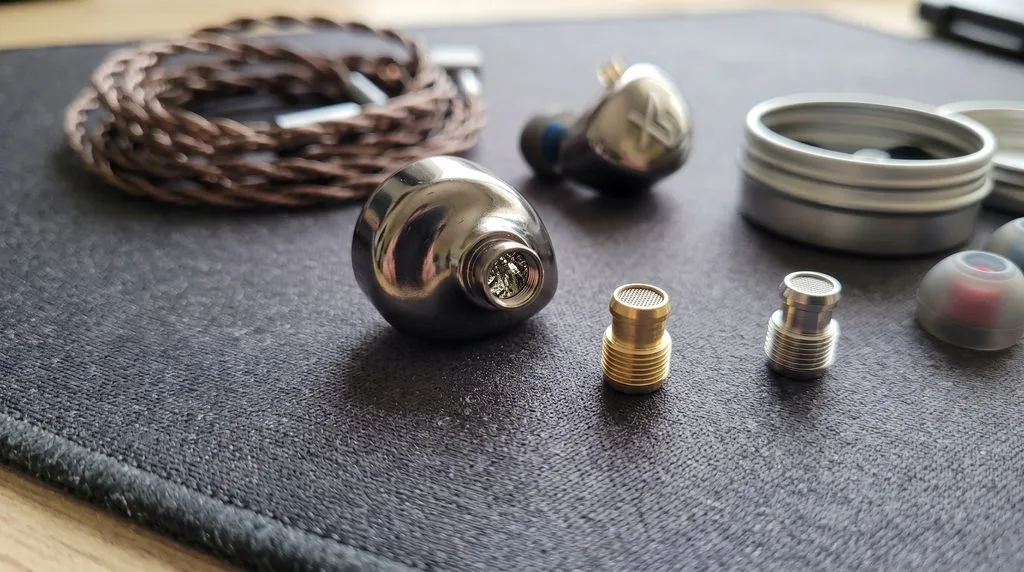
- Second, the nozzle lip diameter measures 6.2mm, which is wider than average and stretched my ear canals when using the medium silicone tips. Switching to the small ear tips reduced the pressure, though listeners with narrow ear canals will feel fatigue after an hour.
Cable Quality
The 3.5mm analog version uses the same braided silver-plated copper cable found on the pricier Simgot EA500 LM. It is thin, flexible, and produces zero microphonic noise when I rub it against my shirt while walking.
The DSP version cable feels slightly stiffer and retains minor memory bends out of the box, though its L-shaped USB Type-C connector is great for handheld mobile gaming. My main complaint with both cables is the overall length: when plugged into the front port of my PC case sitting next to my desk, the wire barely reaches my ears without draping awkwardly over my right mousepad hand.
Sound Quality
Unlike the single-driver Simgot EW200, the Simgot EW300 uses a tribrid, three-driver configuration per side: a 10mm ceramic composite dual-chamber dynamic driver for bass and lower mids, paired with a 6mm planar magnetic driver and a piezoelectric ceramic driver for high frequencies.
Out of the box, the silver nozzle (with a red O-ring) comes pre-installed, tuned close to Simgot’s modified Harman 2019 target. You also get a gold brass nozzle (with a violet O-ring) that dampens the highs and boosts the low end.
Bass Response
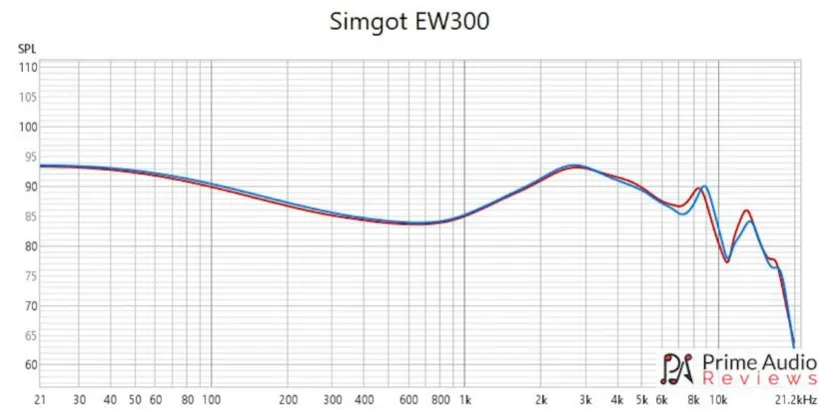
The immediate difference between this set and older Simgot earphones is the low-end weight. With the pre-installed Silver Nozzle, the sub-bass delivers a deep, physical rumble without bleeding into the midrange. On In Da Club by 50 Cent and Tangerine Rays by Zeds Dead, the kick drums hit with tight authority and fast decay. It stays far cleaner than bloated wireless earbuds while still offering enough punch for hip-hop and EDM.
Switching to the Gold Nozzle boosts both sub-bass and mid-bass presence, creating a much warmer, heavier sound. Bass lovers will enjoy the extra slam on rap tracks, but I found that putting the foam inserts inside the Gold Nozzle made acoustic and jazz tracks sound overly muddy and muffled.
Midrange & Vocals
Because the lower midrange has more warmth and body than previous Simgot releases, male vocals and rhythm guitars sound full rather than thin. Instruments like cellos and acoustic guitars carry realistic weight.
However, upper-midrange vocals behave very differently depending on your nozzle setup:
- On the Silver Nozzle without foam inserts, there is a noticeable lift around 3kHz to 4kHz. When listening to Adele belt out high notes on When We Were Young and Chasing Pavements, her voice sounded borderline shouty, with sharp “S” and “P” sounds.
- Dropping one of the included circular foam dampers into the Silver Nozzle fixed this issue immediately, smoothing vocal peaks while keeping the midrange clear.
- One minor quirk of the hybrid planar and piezo setup is a slight metallic timbre that occasionally shows up on solo piano notes.
Treble & Clarity
Treble-sensitive listeners who found the Simgot EW200 or Simgot EA500 LM too piercing will feel right at home here. The Simgot EW300 reduces the sharp peaks between 4kHz and 6kHz and features a controlled dip around 10kHz. On the DSP version, the frequencies roll off even more smoothly past 5kHz.
Even with this relaxed upper end, the 6mm planar and piezoelectric drivers maintain crisp detail recovery. Listening to Shoot to Thrill by AC/DC and the orchestral chimes on the Alfie main theme, cymbals and strings came through cleanly without any harshness at higher volumes. If you use the Gold Nozzle, however, the treble rolls off so heavily that songs lose their sense of air and sparkle—which is why I stuck with the Silver Nozzle for 90% of my testing.
Soundstage & Directional Imaging
Thanks to the venting ports on the inner shell, horizontal left-to-right width is solid, supported by a centered vocal image. For regular music playback, separating background strings from lead vocals is easy.
However, the soundstage expands horizontally rather than vertically. On grand cinematic tracks like Test Drive by London Music Works, the presentation feels somewhat narrow and tall, pushing instruments closer to your head rather than giving you an open concert-hall feeling.
Gaming Performance
I tested both versions in Counter-Strike 2 and Valorant, and my results varied sharply depending on how chaotic the round became.
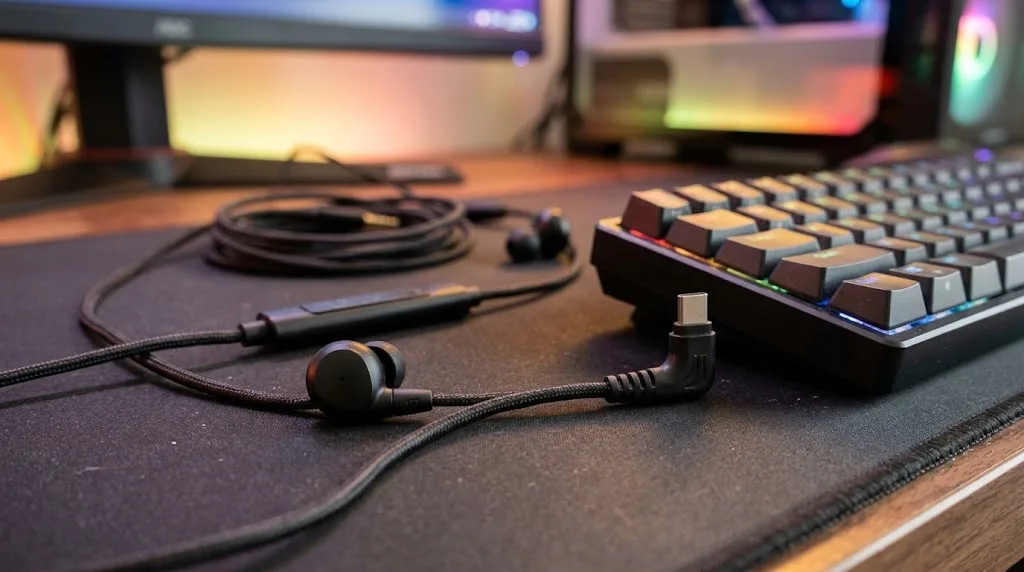
In Counter-Strike 2, directional left-to-right panning worked well in quiet 1v1 or 2v2 clutch scenarios. Gunshots from an AK-47 or AWP carried a satisfying low-end punch without drowning out reload audio cues, and the DSP version allowed me to plug straight into my laptop and talk to teammates on Discord using the inline mic. The microphone sounds clear for casual gaming callouts, though it is no replacement for a dedicated studio condenser mic.
However, when I switched to Valorant and played heavy site executes with multiple abilities and footsteps happening at once, the Simgot EW300 struggled with depth perception. Because the elevated bass pushes sound cues forward inside a relatively narrow stage, footsteps often sounded much closer than they actually were. During one match holding mid, I pre-fired a corner thinking an enemy was right next to the wall, only to realize they were several meters further back. If you play casual games or single-player titles, the immersive bass is great, but serious tactical shooter players will notice the compressed distance layering.
How Does the Simgot EW300 Stack Up?
The $60 to $90 bracket is packed with strong wired earphones. Here is how the Simgot EW300 compares to three direct competitors I have tested.
Simgot EW300 vs. Simgot EA500 LM ($79.99 – $89.99)
The Simgot EA500 LM uses a single dynamic driver and sits in the exact same $80 to $90 price bracket as the Simgot EW300 lineup. In side-by-side listening, the EA500 LM delivers a wider soundstage, leaner sub-bass, and sharper micro-detail retrieval. However, its lower treble is much brighter and can cause ear fatigue during long sessions. Pick the Simgot EA500 LM if you want maximum analytical detail and stage width. Pick the Simgot EW300 if you want stronger bass and a smoother, fatigue-free treble response.
Simgot EW300 vs. Truthear Hexa ($79.99)
For competitive gaming and pure instrumental separation, the Truthear Hexa wins easily. In Valorant and Counter-Strike 2, the Truthear Hexa places footsteps at their exact distance without any bass bloat muddying the mix, and orchestral tracks sound more open and natural. On the flip side, the Truthear Hexa can sound flat and boring on hip-hop or pop playlists, whereas the Simgot EW300 delivers a much punchier, lively low end for everyday music.
Simgot EW300 vs. Kefine Delci ($59.00)
Priced around $59, the Kefine Delci uses a single dynamic driver with a classic V-shaped tuning. It digs slightly deeper in the sub-bass than the Simgot EW300 and pulls out impressive micro-details for roughly $20 less, though its midrange vocals sit further back in the mix. The Kefine Delci lacks swappable tuning nozzles, making the Simgot EW300 the more versatile option if you want fuller vocals and hardware tuning filters.
Final Recommendation
The Simgot EW300 is a well-built, warm-leaning tribrid IEM that successfully tones down the harsh upper frequencies of earlier Simgot models while adding real sub-bass weight. Between the three models, skip the $79.99 mirror-chrome Standard version and grab the $77.39 HBB Edition (discounted from $85.99) instead.
You save money and get a matte black finish that resists fingerprints. Only spend the extra money on the $91.99 DSP version if you specifically want an all-in-one USB Type-C cable with a built-in DAC and inline microphone for mobile or laptop use. Just make sure to use the Silver Nozzles with one foam insert installed if you find upper-midrange vocals too sharp.
Buy the Simgot EW300 if:
- You listen to hip-hop, EDM, rock, or pop and want punchy bass with smooth, non-fatiguing treble.
- You like experimenting with hardware tuning nozzles and foam dampers to adjust vocal warmth.
- You want an all-in-one USB Type-C earphone with an inline mic (DSP version) that plugs straight into your phone or laptop.
Skip the Simgot EW300 if:
- You have small ear canals that get sore from wide 6.2mm nozzles.
- Your primary goal is competitive footstep tracking in Valorant or CS2 (buy the Truthear Hexa instead).
- You prefer a wide, airy, analytical sound signature over a warm, bass-boosted presentation (buy the Simgot EA500 LM instead).
Frequently Asked Questions
Clear answers to common questions about performance, pairing, and value.