
I’ve had the Kiwi Ears Astral in my rotation for a while now, and I keep coming back to it. That alone told me it was worth writing this Kiwi Ears Astral review.
This is a 1 dynamic driver, 6 balanced armature hybrid. It sits at $299, though I’ve seen it drop lower depending on where you shop. It came out about a year ago, and in the world of IEMs reviews, that’s enough time for a dozen new releases to try and steal its spot. The Kiwi Astral IEM is still holding its own.
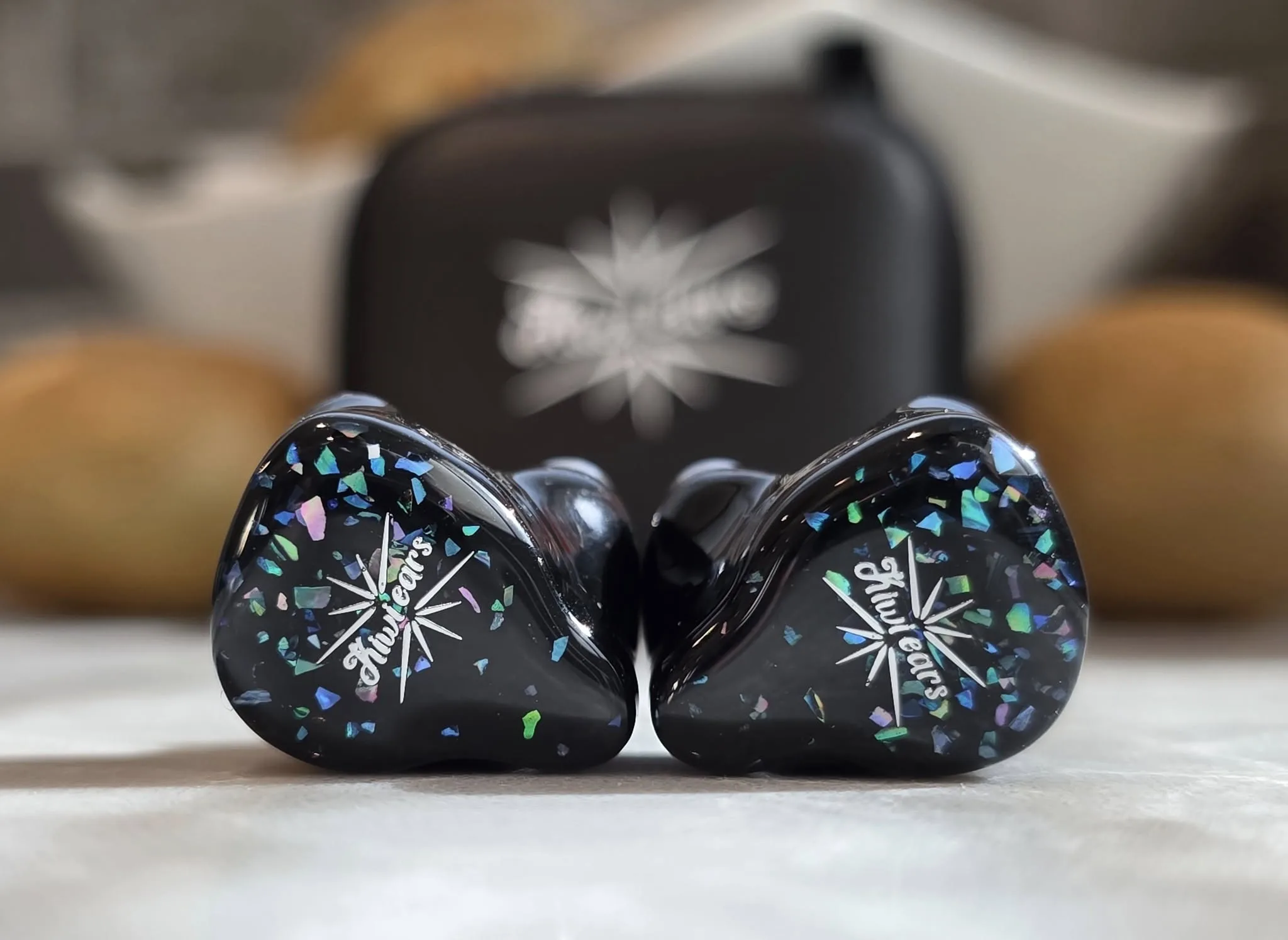
Kiwi Ears Astral Specifications
| Spec | Details |
|---|---|
| Price | $299 |
| Driver Configuration | 1 Dynamic Driver + 6 Balanced Armatures |
| Impedance | 23 ohms |
| Sensitivity | 105 dB |
| Shell Material | 3D printed resin |
| Cable | Modular, 3.5mm / 4.4mm terminations |
| Connector | 0.78mm 2-pin |
| Colors | Blue, Gold |
| Included Tips | 3 pairs of silicone tips |
| Case | Included carrying case |
| Sound Signature | Neutral-leaning U-shape, vocal-forward |
How I Tested These
I ran the Kiwi Ears Astral for a few weeks before writing anything down. I don’t trust first impressions on IEMs, especially with hybrid sets, because the balanced armatures and dynamic driver can take a bit to settle into your ear and your head.
Here’s my testing setup, in short:
- Extra testing: A few sessions gaming, mostly competitive shooters, to see if it could hold up as a contender for best IEM for gaming, not just music
- Main source: Colorfly CDA-M2 dongle, cross-checked occasionally with a Heartfield R1
- Everyday test: Straight off my phone for a few sessions, since it’s easy to drive (23 ohms, 105dB sensitivity)
- Tips used: Stock tips for most of the listening, then swapped to foam tips partway through; the sound shifted more than I expected
- Music focus: Vocal-heavy tracks, jazz, some orchestral material
What’s in the Box
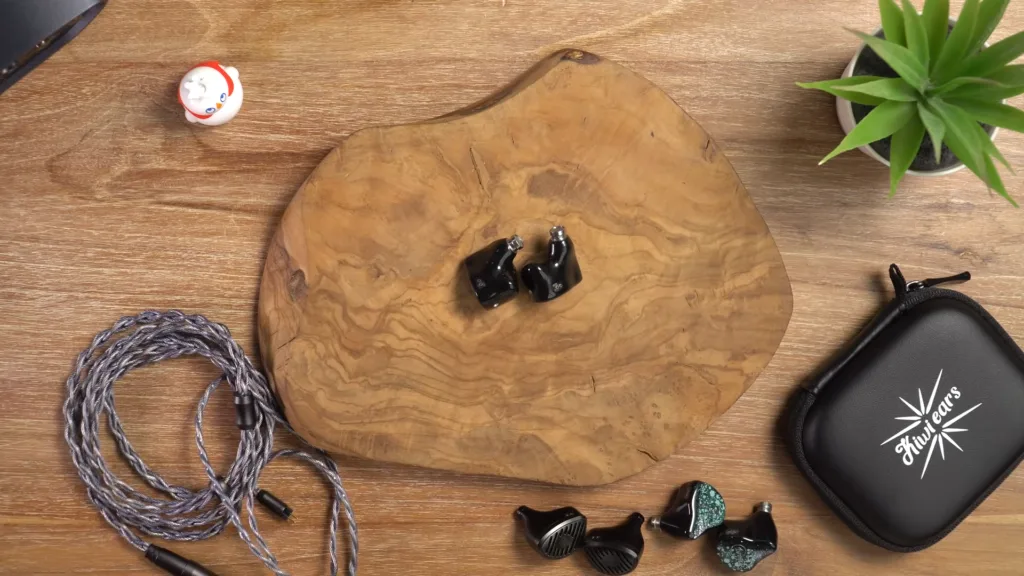
You get the Astral itself, a modular two-pin cable with swappable 3.5mm and 4.4mm terminations, a basic carrying case, and three pairs of silicone tips with a few spare nozzle filters.
Three pairs of tips at this price point feels thin. Some competitors in the same bracket throw in twice that. If you already have a favorite third-party tip, you’ll reach for it here.
Build, Design & Comfort
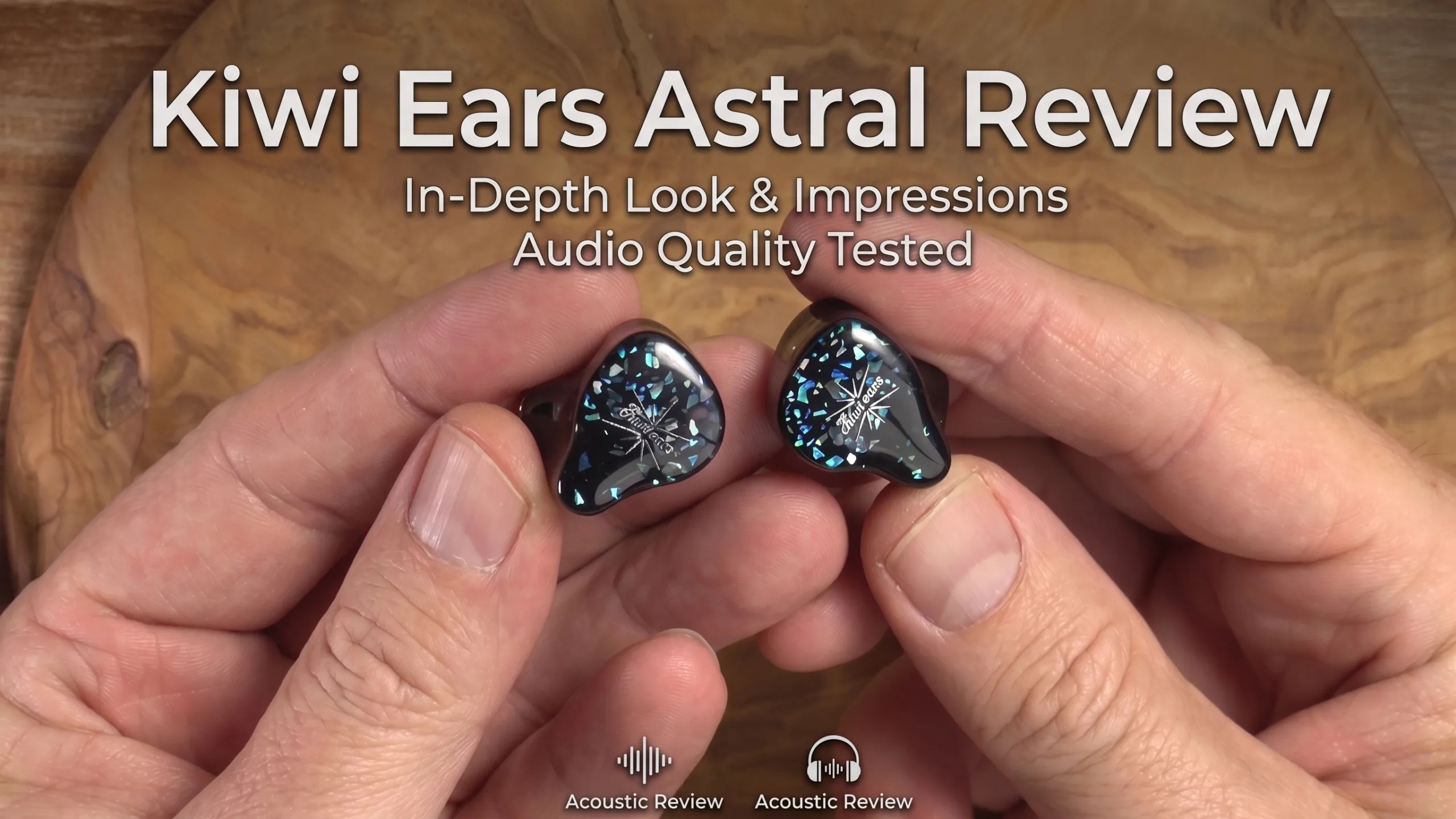
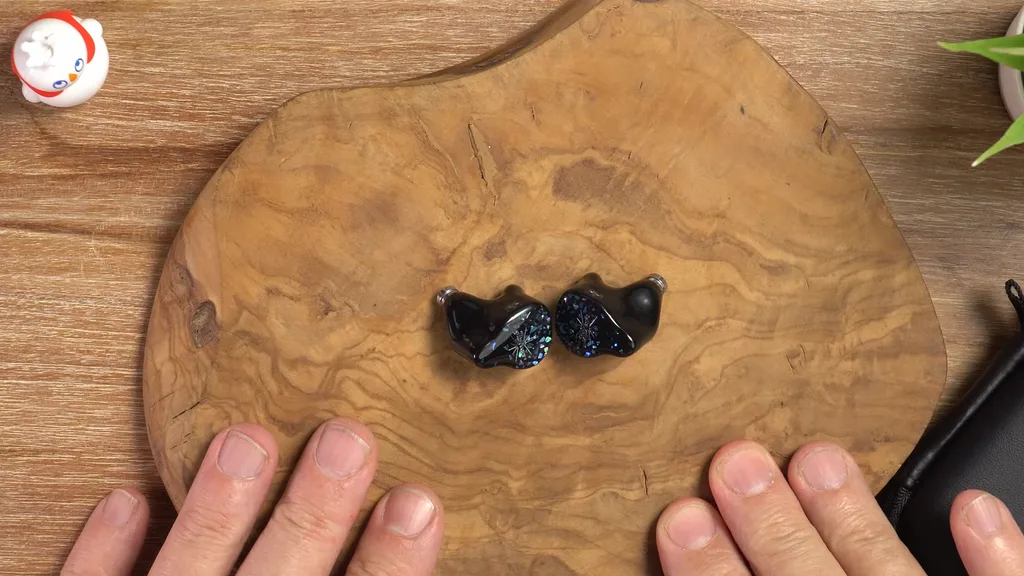
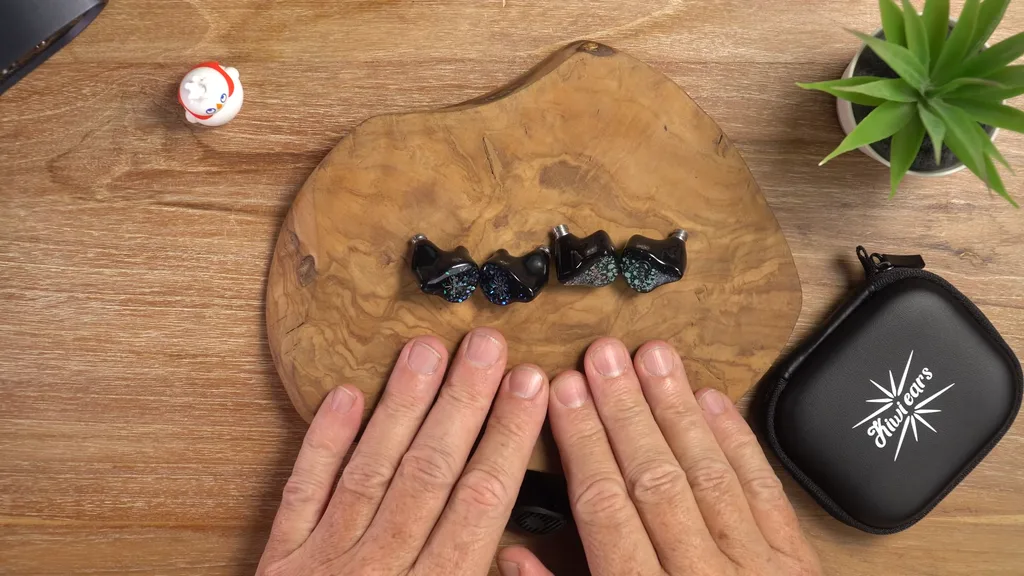
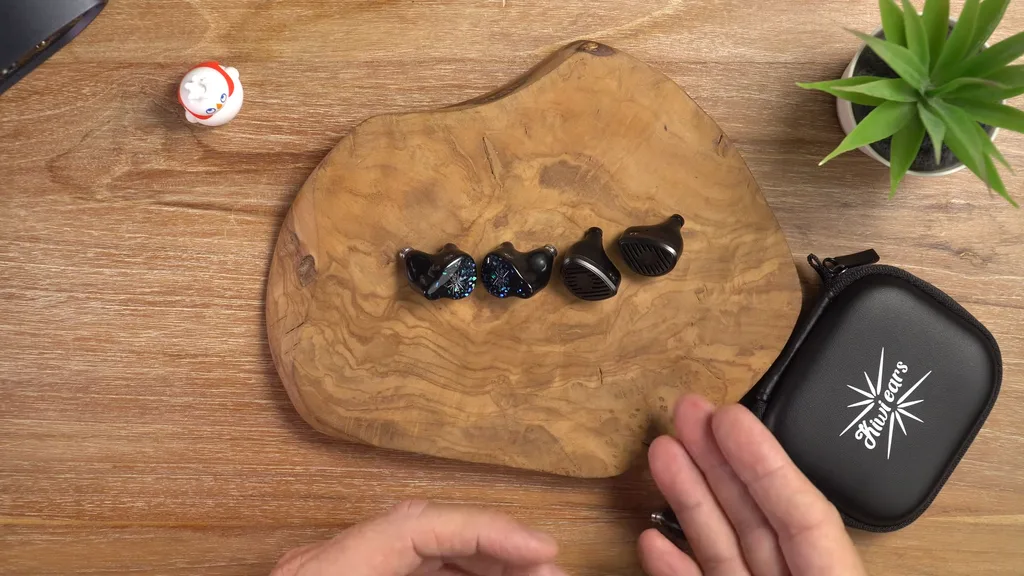
The shells are 3D-printed resin, and they look genuinely nice in person. Mine has a speckled, almost abalone-like shimmer in the light. It comes in two colorways, a deep blue and a warmer gold, and both photograph better than most IEMs at this price.
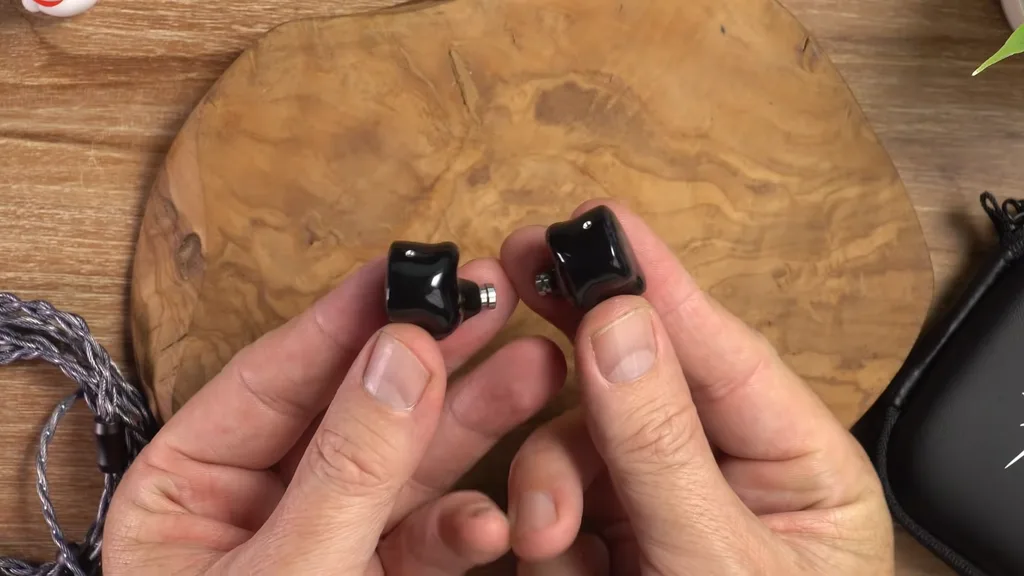
Comfort is a mixed bag for me. The shape follows the ear well, and the fit is secure once it’s in, but the shells run a little wide. If you have smaller ears, expect some initial adjustment. I can wear these for a couple of hours before I start noticing them, which is fine but not exceptional.
The cable itself is soft and doesn’t fight you much, though the texture is a little rubbery, so if it does tangle, it takes a bit more patience to sort out.
Sound Quality
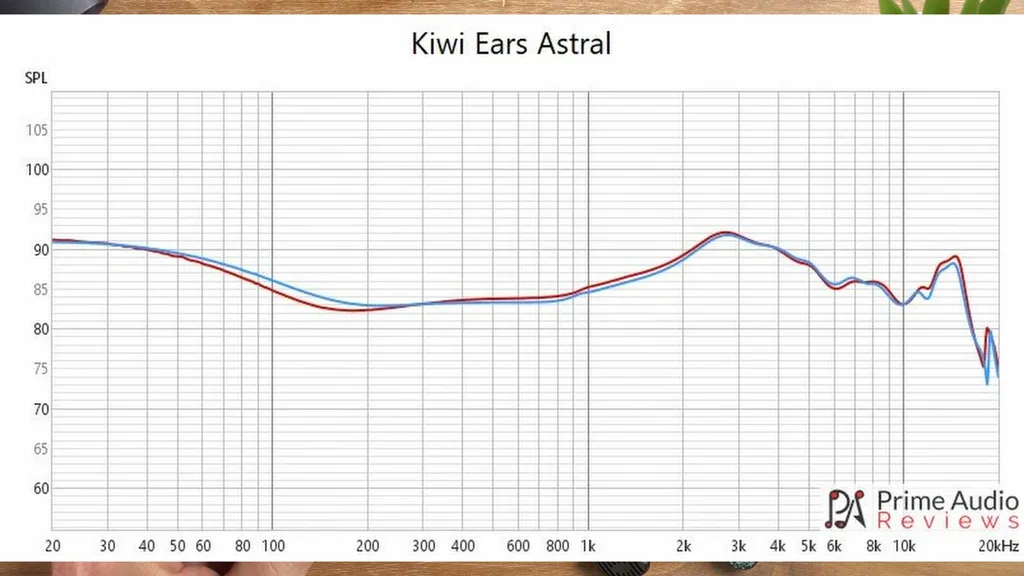
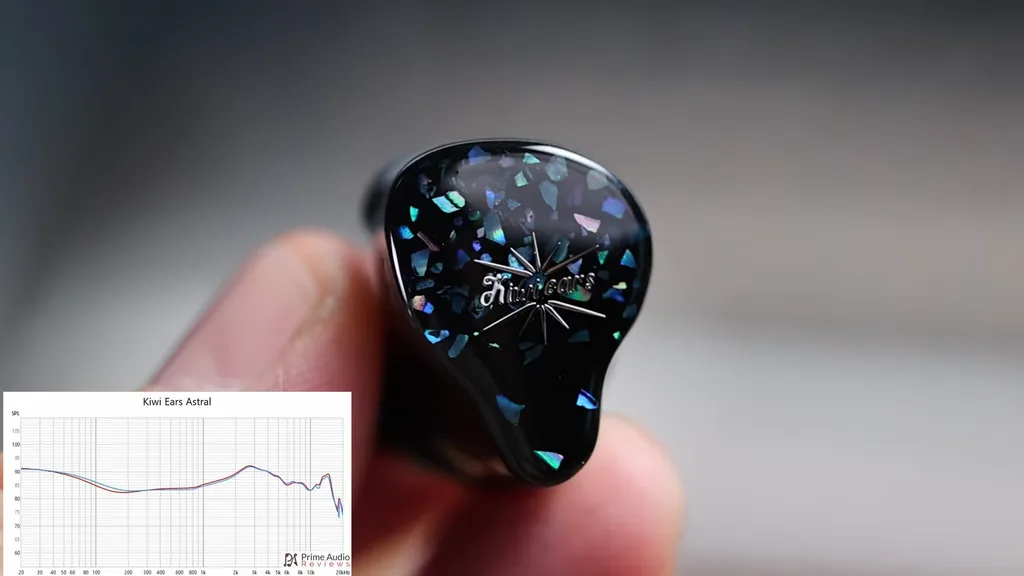
If I had to sum up the Kiwi Ears Astral in one line, I’d call it a neutral-leaning U-shape with a strong emphasis on vocal clarity. It’s not chasing warmth, and it’s not chasing bass slam either. It’s chasing precision.
That’s going to be a selling point for some of you and a dealbreaker for others, so let me break it down properly.
Sub-bass & mid-bass
There’s a noticeable lift in the sub-bass, but it doesn’t translate into a heavy, physical thump. It’s more of a controlled rumble than a chest-thumping one. Mid-bass is pulled back by comparison, which keeps things clean but occasionally leaves the low end feeling a touch light if you’re coming from a bassier set.
Lower mids
This is where the personality of this Kiwi Astral IEM really shows. The lower mids are clean, with no bass bleed muddying things up. I found them a little lean at times, and I wouldn’t have minded a touch more warmth here for fuller-bodied male vocals. It’s a minor gripe, not a dealbreaker.
Upper mids and vocals
Vocals are the star of the show. There’s a forward push around the presence region that makes voices, especially female vocals, sit right up front without ever sounding shouty or strained. I threw a lot of vocal-heavy jazz at this set, and it never let me down.
Treble
The treble is where I have my one real nitpick. It’s extended, airy, and detailed, genuinely impressive for the price. But there’s enough energy in the upper treble that I’d call it a smidge bright. It never tipped into harsh or sibilant territory for me, but if you’re treble-sensitive, I’d recommend trying before you buy if you can.
Technical performance
Soundstage is wide with good height, imaging is precise, and instrument separation is excellent. This is where the six balanced armatures really earn their keep. Detail retrieval is up there with some pricier sets I’ve tried.
Gaming Performance
I wasn’t expecting to spend as much time gaming with the Kiwi Ears Astral as I did, but the imaging pulled me in. In competitive shooters, footstep placement was genuinely useful, not just accurate on paper but usable in the moment. I could tell direction and rough distance without much second-guessing.
Gunfire and explosions stayed controlled rather than turning shrill, which matters a lot in longer sessions. If you’re hunting for the best IEM for gaming that also holds up for everyday music listening, this one pulls double duty better than most in its price range.
Comparisons
Kiwi Ears Astral vs Kiwi Ears Septet ($299 vs $269)
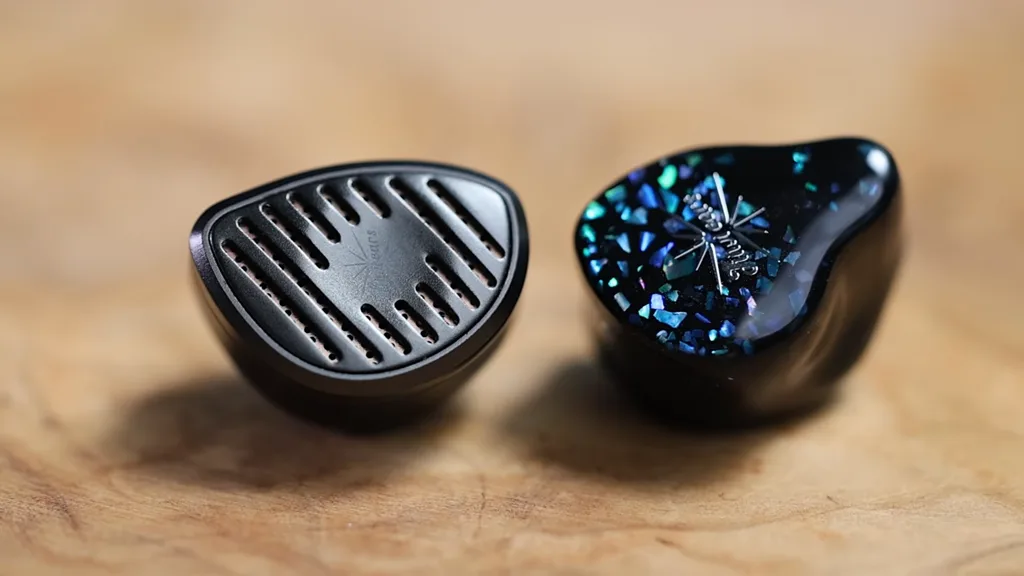
The Septet runs a different setup: one dynamic driver, four balanced armatures, a planar, and a piezoelectric unit. More going on internally, despite the lower price. Build-wise, the Septet feels more premium, all metal versus the Astral’s resin. But I find the Astral more comfortable over long sessions.
The Septet needs real power to sound its best. Off a phone or basic dongle, it sounds thinner than it should. The Astral doesn’t have that problem. For me, the Astral is the more practical pick unless you already own a proper amp and want that extra bass weight.
Kiwi Ears Astral vs Ziigaat Arcanus ($299 vs $399)
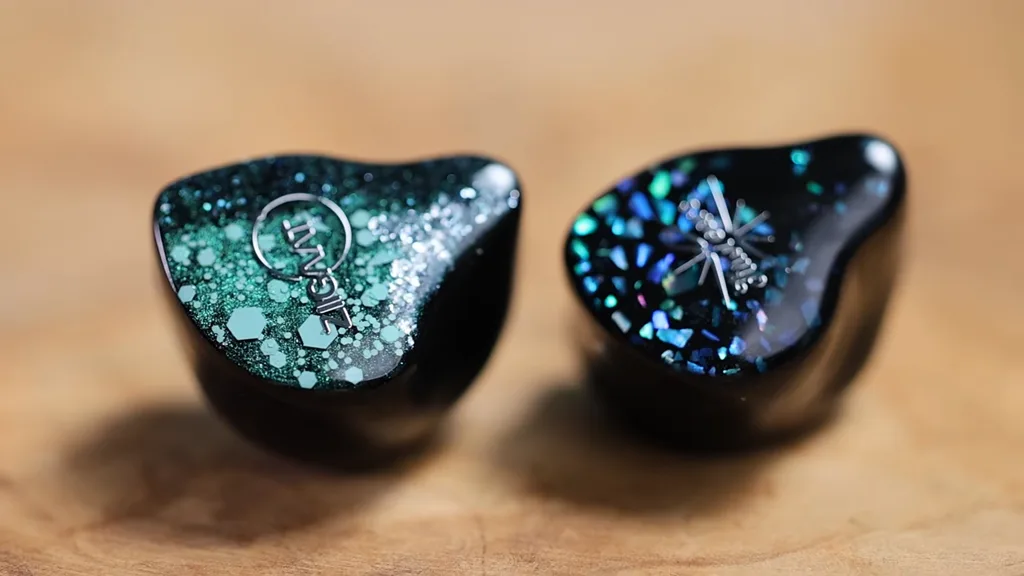
These two could pass for siblings. Both use 3D-printed resin shells, and both sit in the seven-driver class. Fit and isolation feel about the same to me. The Astral has a slightly more lifted presence region, so vocals pop a touch more. The Arcanus also edges out the Astral in treble extension.
The Arcanus counters with a bit more bass authority, and its more relaxed treble makes it the safer pick if you’re sensitive up top. Overall, these two perform at a similar level. With the Arcanus running $100 more, I don’t hear enough of a gap to justify the extra cost.
Kiwi Ears Astral vs EP321 (similar price bracket)
Both are technical, detail-forward sets. The difference is where the brightness sits. The EP321’s energy is centered in the lower treble, giving it more bite on cymbals. The Astral’s brightness sits higher up, in the upper treble. I find that easier to live with over long sessions.
The EP321 pulls back on bass but adds warmth in the lower mids. The Astral keeps a fuller low end and a more neutral balance overall. Both are strong technically. But for pure enjoyment, I keep reaching for the Astral.
Kiwi Ears Astral vs Performer 8S (similar price bracket)
This is the biggest tuning gap on this list. The 8S goes smooth and relaxed everywhere the Astral goes engaging and technical. It brings the bass down, adds warmth in the lower mids, and pulls back the treble. The result is a genuinely fatigue-free listen.
None of that makes the 8S worse. It’s one of my favorites in this bracket, just for a different mood. For critical listening or gaming, I reach for the Astral. For background listening, the 8S wins that slot.
Who Should Buy This
Pick the Kiwi Ears Astral if you want clarity-forward vocals, a technical presentation, and a set that works equally well for music and competitive gaming.
Skip it, or at least demo it first, if you’re sensitive to treble or you want a warmer, bassier signature as your primary flavor.
Final Verdict
A year on, and with the price having softened a bit, the Kiwi Ears Astral is an even easier recommendation than it was at launch. It’s not a perfect set. I’d still like a touch more low-mid body, and the treble runs a little hot for my personal taste. But the vocal clarity, the technical chops, and the price-to-performance ratio are hard to argue with in this range.
If you’re shopping under $300, want something that pulls double duty as a strong IEM for gaming, and vocals matter to you, put the Astral on your shortlist.
Frequently Asked Questions
Clear answers to common questions about performance, pairing, and value.