

I’ve spent the last few months doing one very specific, slightly unhinged thing: swapping IEMs in and out mid-match to figure out which ones actually help me hear footsteps, reloads, and rotations before my squad does. If you’re searching for the best IEM for gaming, you’ve probably already noticed the space is a mess. Half the “review” sites are secretly selling you something, and the other half copy-paste spec sheets without ever putting the things in their ears.
This isn’t that. I bought, borrowed, or got review samples of 7 IEMs spanning $55 to $579, ran them through the same testing process, and I’m going to tell you straight which ones earned a permanent spot in my case and which ones went back in the box.
Best IEM for Gaming Quick Comparison
| IEM | Price | Drivers | Best For |
| Truthear x Crinacle ZERO:RED | ~$55 | 2 DD | Best value / starting point |
| Truthear Hexa | ~$80 | 1 DD + 3 BA | Best sub-$100 all-rounder |
| Kefine Delci AE | ~$79 | 1 DD | Budget dark horse, tunable |
| SIMGOT EM6L | ~$110 | 1 DD + 4 BA | Best imaging under $150 |
| SIMGOT SuperMix 4 | ~$150 | 1 DD + 1 BA + 1 Planar + 1 PZT | Hybrid music and gaming |
| Kiwi Ears Astral | ~$299 | 1 DD + 6 BA | Luxury all-rounder |
| Thieaudio Hype 4 MKII | ~$399+ | 2 DD + 4 BA | Flagship, money no object |
Why I Trust IEMs Over Gaming Headsets Now
I used to be a headset guy. Big cans, “7.1 surround,” RGB, the whole bit. What changed my mind wasn’t marketing; it was a slow realization that my $200 headset was making footsteps sound like mush while a $79 single-driver IEM let me hear a guy reloading two rooms away. IEMs seal your ear canal directly, which does two things gaming headsets structurally can’t: it kills a huge chunk of ambient noise without you cranking the volume, and it puts the driver close enough to your eardrum that treble detail—the range where footstep transients and directional cues live—comes through clean instead of smeared.
There’s also the comfort angle nobody talks about until hour four of a ranked grind: no clamping force, no sweaty ear cups, nothing heating up against your skull. I’ve worn some of these for six-plus-hour sessions without needing to take a break, which is more than I can say for any closed-back headset I’ve owned.
How I Tested These
I didn’t just plug each one in for a track or two and call it a day. Every IEM on this list went through the same process:
- Imaging / Directional Accuracy: Valorant and Apex Legends sessions specifically listening for footstep direction, distance, and elevation (is someone above or below me).
- Soundstage: Does the mix feel spacious and open, or closed in and congested when there’s a lot going on (grenades, gunfire, callouts all at once)?
- Comfort / Ergonomics: Worn for multiple 2+ hour sessions to check for fatigue, hot spots, and tip seal degradation.
- Mic Practicality: Since almost none of these ship with a mic, I noted what you’d need to pair for voice chat.
- Value: What you’re actually getting per dollar versus the rest of the field.
I’m not paid by any of these brands to rank them a certain way, and I bought several of these with my own money. Where I received a review sample, I’ll say so.
The 7 IEMs I Tested, Ranked
- Truthear x Crinacle ZERO:RED — Best Overall Value
- Truthear Hexa — Best All-Rounder Under $100
- Kefine Delci AE — Best Budget Dark Horse
- SIMGOT EM6L — Most Balanced Hybrid Under $150
- SIMGOT SuperMix 4 — Most Interesting Driver Setup
- Kiwi Ears Astral — Best “Luxury” Pick, If You Can Justify It
- Thieaudio Hype 4 MKII — Best If Money Is No Object
1. Truthear x Crinacle ZERO:RED — Best Overall Value
Price: ~$55 | Drivers: 2x Dynamic Driver | Tuning: Neutral
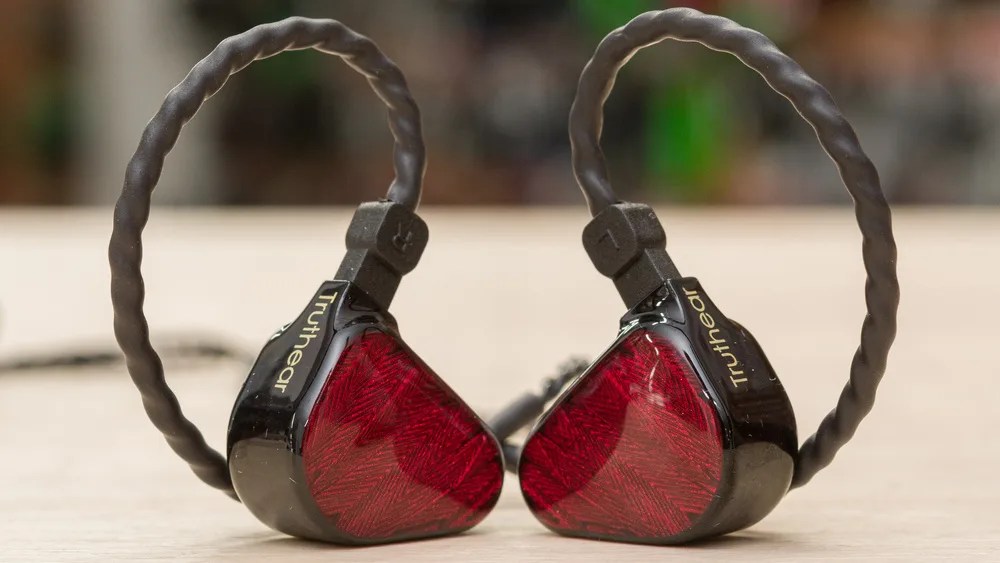
Truthear x Crinacle ZERO:RED
Drivers: 2x Dynamic Driver | Tuning: Neutral
This is the one I keep recommending to friends who ask me where to start, and it’s not close. The ZERO:RED is a dual dynamic driver design tuned toward neutral rather than the bass-heavy V-shape most budget IEMs chase, and that decision is exactly why it works for gaming. Footsteps don’t get buried under boosted bass; they sit right where they should in the mix. Imaging is genuinely impressive for the price; I could consistently tell left from right and get a rough read on distance in Apex without straining.
It won’t out-resolve the pricier sets on this list in raw detail retrieval, and the nozzle is a little long for smaller ears, so tip rolling matters here. But at $55, there is nothing else in this shootout that gets you this close to competitive-grade imaging for this little money.
Best for: Anyone who wants to actually try this whole “IEMs for gaming” thing without committing serious cash.
2. Truthear Hexa — Best All-Rounder Under $100
Price: ~$80 | Drivers: 1 Dynamic + 3 Balanced Armature | Tuning: Neutral
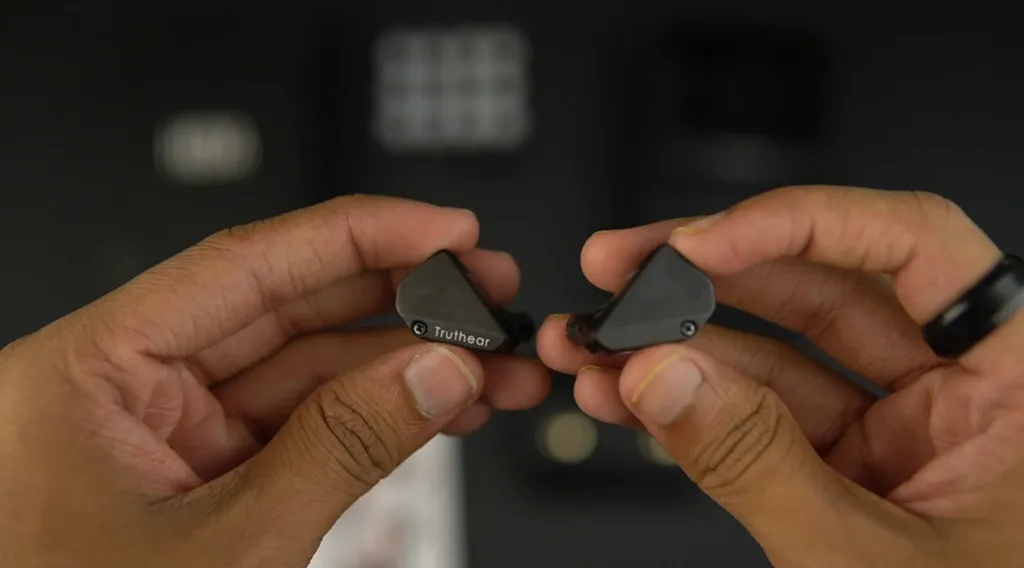
Truthear Hexa
Drivers: 1 Dynamic + 3 Balanced Armature | Tuning: Neutral
The Hexa has a reputation in the audio community as a “king of sub-$100” set, and after living with it for a few weeks, I get why. The hybrid setup gives it more technical separation than the single-dynamic ZERO:RED, vocals and in-game callouts sit clearer, and treble extension is noticeably better, which matters when you’re trying to parse a distant gunshot from ambient noise. Bass is intentionally restrained, which some music listeners find thin, but for competitive gaming, I actually prefer it since nothing’s masking the frequencies I care about.
The catch: the stock cable is mediocre, and some units benefit from a short burn-in period before the treble settles in. Neither is a dealbreaker.
Best for: Gamers who want a genuine step up in detail over budget picks without leaving double digits behind.
3. Kefine Delci AE — Best Budget Dark Horse
Price: ~$79 | Drivers: 1 Dynamic Driver | Tuning: Warm neutral (nozzle dependent)
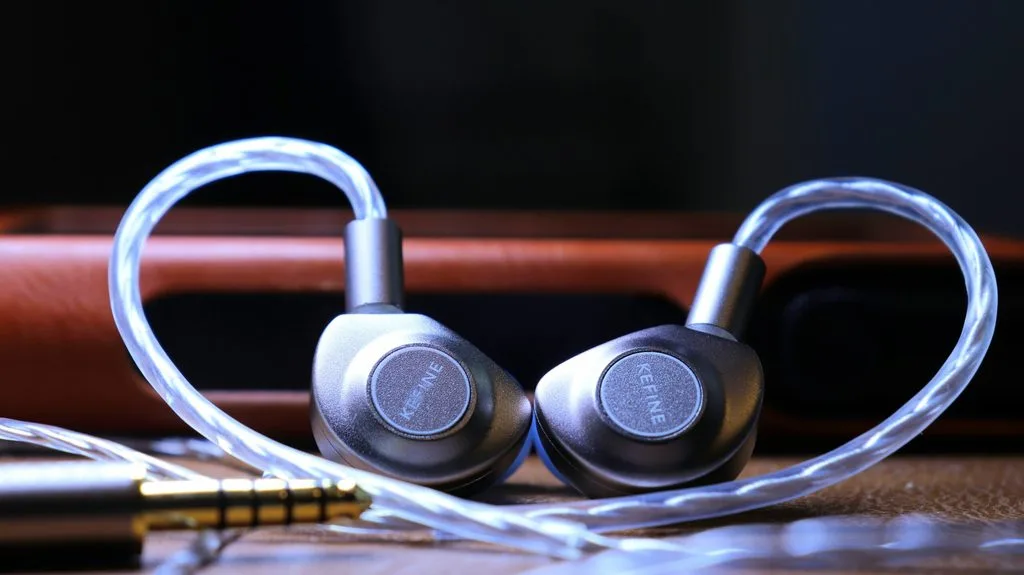
Kefine Delci AE
Drivers: 1 Dynamic Driver | Tuning: Warm neutral (nozzle dependent)
This one surprised me. It’s a collab between Kefine and Angel Ears, and it ships with swappable tuning nozzles—silver and bronze—that meaningfully shift the sound. The silver nozzle is the one I used for gaming: it pulls back some warmth and opens up the upper mids, which helped footstep cues cut through more cleanly than I expected from a single-driver set at this price. The bronze nozzle leans brighter and can get a touch peaky, so I mostly left it in the case.
Comfort was a pleasant surprise too: small shell, disappears in the ear during long sessions. It’s not going to out-image the hybrid sets above it, but as a “you’re not missing much for the money” pick, it earns its spot.
Best for: Budget shoppers who want tuning flexibility built in.
4. SIMGOT EM6L — Most Balanced Hybrid Under $150
Price: ~$110 | Drivers: 1 Dynamic + 4 Balanced Armature | Tuning: Harman/H-2019 target
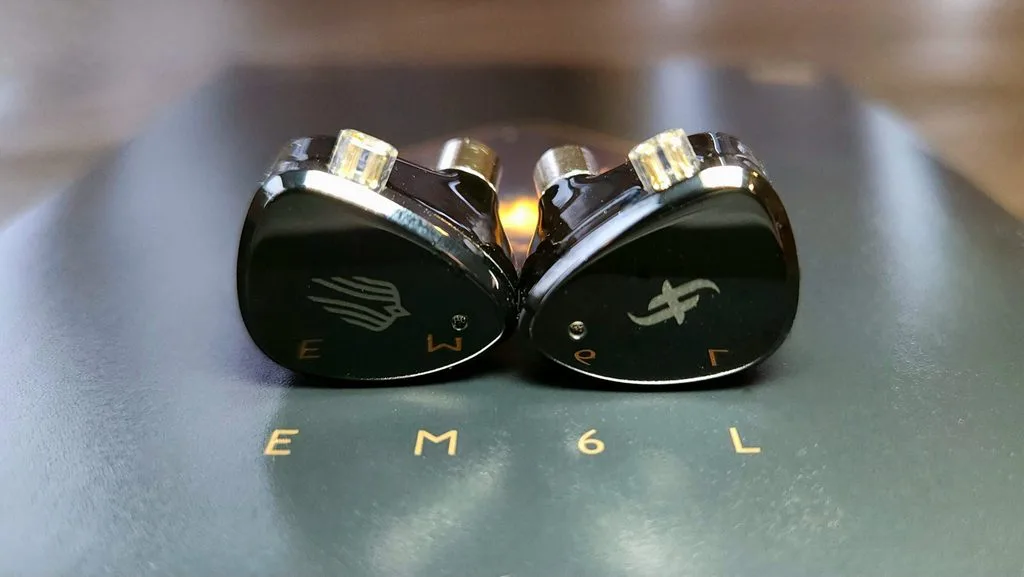
SIMGOT EM6L
Drivers: 1 Dynamic + 4 Balanced | Tuning: Harman/H-2019 target
The EM6L has been a fixture in budget audiophile conversations for a couple of years now, and it earns that reputation for gaming too. Five drivers, tuned toward the H-2019 target curve, which is specifically built around accurate soundstage and imaging rather than chasing bass impact. In practice, that meant some of the most confident directional placement I got in this whole test. Footsteps behind walls had real spatial weight, not just “left ear vs. right ear.”
The trade-off is mid-bass that can get a touch boomy on certain tracks, and it’s a small shell that fits great for average to small ears but might feel snug otherwise. Noise isolation is genuinely excellent—among the best I tested here.
Best for: Competitive players who want serious imaging without breaking $150.
5. SIMGOT SuperMix 4 — Most Interesting Driver Setup
Price: ~$150 | Drivers: 1 Dynamic + 1 Balanced Armature + 1 Planar + 1 Piezoelectric | Tuning: Slight U-shape
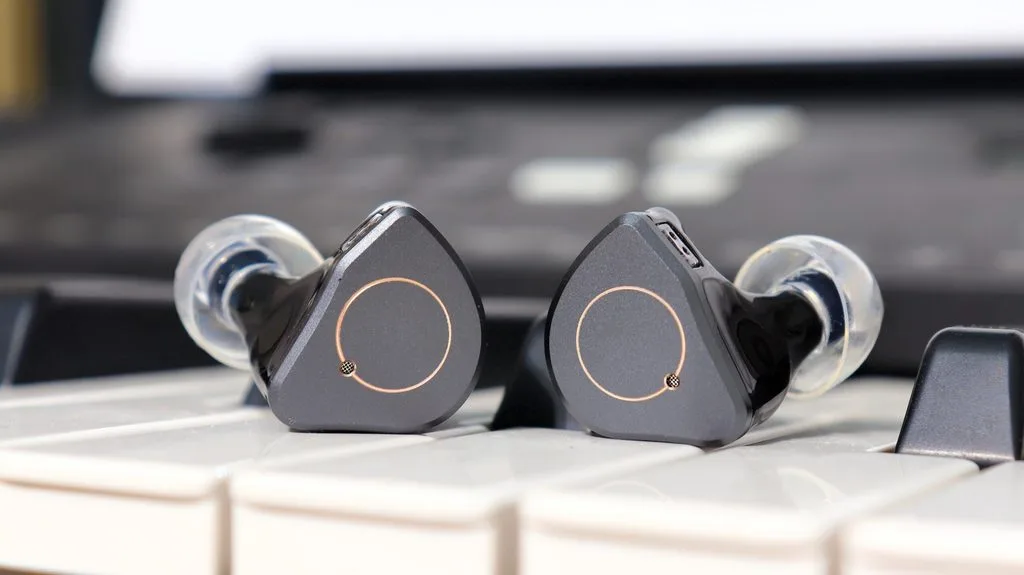
SIMGOT SuperMix 4
Drivers: 1 Dynamic, Balanced Armature | Tuning: Slight U-shape
This is a genuinely unusual IEM—four completely different driver technologies working together, including a planar for the highs and a piezoelectric transducer for extended treble. On paper, it should be the most exciting set on this list, and treble extension genuinely is excellent. Cymbal hits and high-frequency game audio (glass breaking, distant pings) have real air to them. But I’ll be honest: the imaging didn’t blow me away relative to the EM6L, which costs less. It’s a slight U-shape tuning rather than the flatter, imaging-first curve of the EM6L, so bass and treble get a bit more emphasis than the mids where a lot of directional cues actually live.
Build quality and comfort are both strong, and if you split time between music and gaming, the extra treble sparkle is genuinely enjoyable. As a pure gaming imaging tool, though, it’s not my top recommendation at this price.
Best for: Hybrid listeners who game sometimes but want exciting all-around sound the rest of the time.
6. Kiwi Ears Astral — Best “Luxury” Pick, If You Can Justify It
Price: ~$299 | Drivers: 1 Dynamic + 6 Balanced Armature | Tuning: Neutral with bass boost
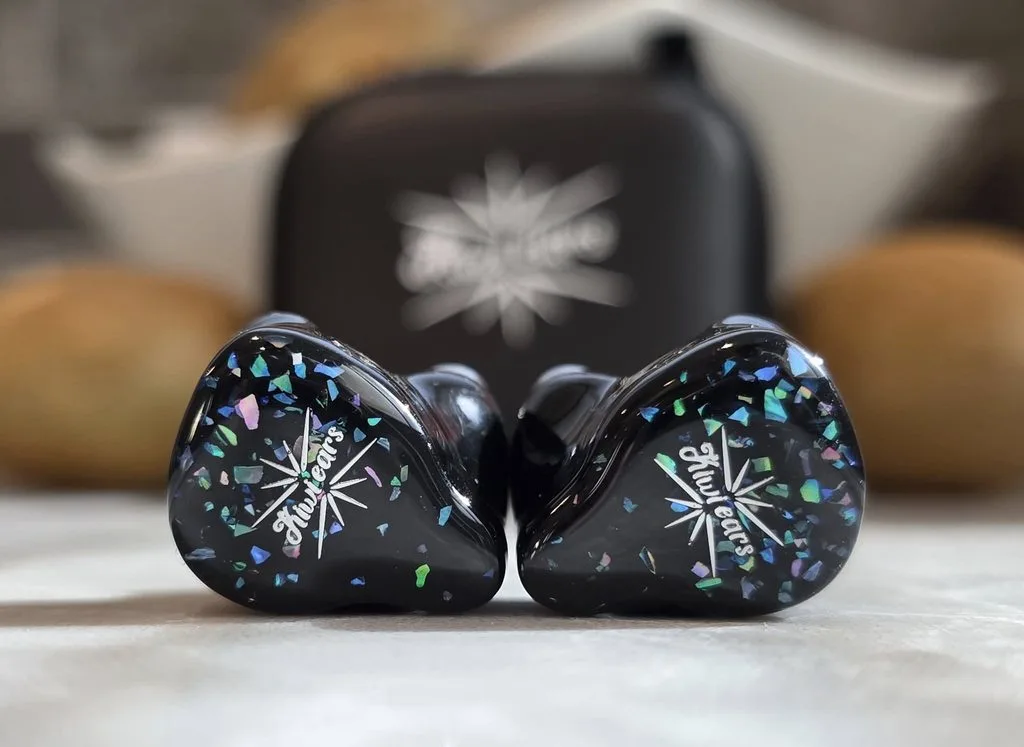
Kiwi Ears Astral
Drivers: 6 Balanced Armature | Tuning: Neutral with bass boost
The Astral is the most expensive-feeling product on this list before you even plug it in: bigger resin shell, modular 3.5mm/4.4mm cable, genuinely premium unboxing. Sonically, it’s a strong performer: sub-bass has real weight, the midrange stays clean and neutral, and imaging is precise once you dial in fit. That last part matters—the shell is noticeably larger than everything else here, and I know a few people who found long sessions less comfortable because of it.
Is it better for gaming than the $110 EM6L? Marginally, in technical detail and separation. Is it three times better? No. This is a “if you’re already an audiophile who also games” purchase, not a “start here” recommendation.
Best for: Listeners who want one IEM that does double duty as a serious music set and a gaming set.
7. Thieaudio Hype 4 MKII — Best If Money Is No Object
Price: ~$399 to $579 (regional pricing varies) | Drivers: 2 Dynamic + 4 Balanced Armature | Tuning: Neutral bright
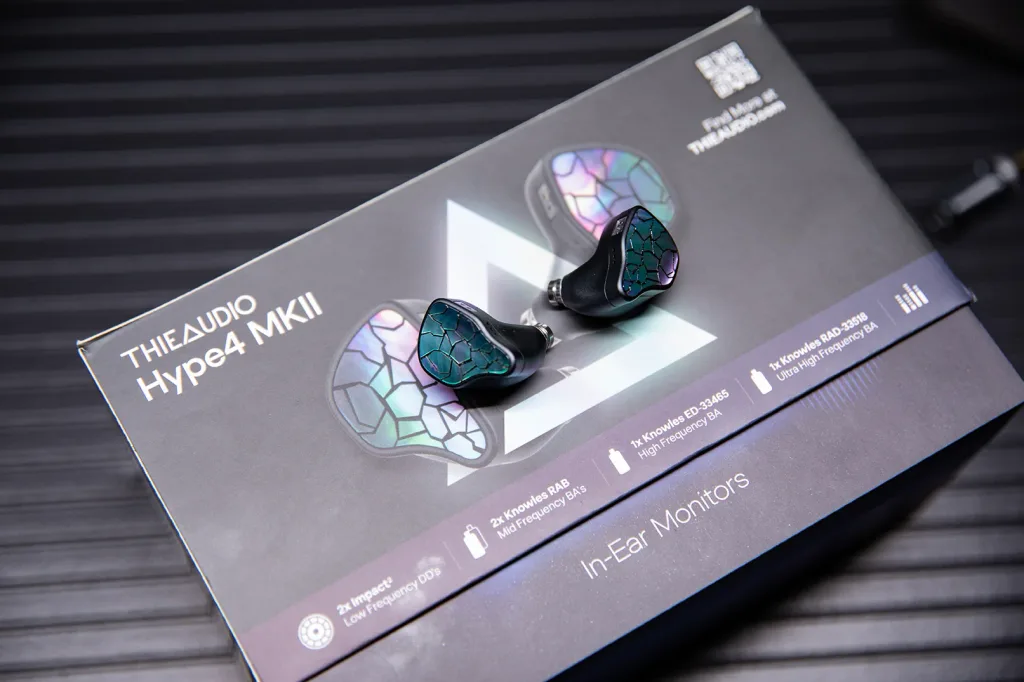
Thieaudio Hype 4 MKII
Drivers: 2 Dynamic + 4 Balanced Armature | Tuning: Neutral bright
The most expensive IEM I tested, and it plays the part: CNC-machined aluminum shells, a genuinely excellent modular cable, and a dual-dynamic driver bass module that hits with real authority. Technically, this is the most resolving set on the list: detail retrieval, soundstage width, and instrument (and sound effect) separation are all a clear step above everything else here.
For gaming specifically, though, I want to be honest with you: the improvement over the $110 to $150 sets was real but incremental, not transformative. You’re paying a steep premium for the last 10% of technical performance, and the tuning leans slightly bright, which can get fatiguing over long sessions for treble-sensitive ears. If budget is genuinely no object, this is a fantastic IEM. If you’re asking “will this make me a better player,” the honest answer is: not more than the sets a quarter of the price will.
Best for: Enthusiasts who want flagship-tier technical performance and don’t mind paying for the last few percent.
A Quick Note on Mics
Worth being upfront about: almost none of these are gaming-marketed IEMs with a built-in mic. If voice chat matters to you, plan on pairing whichever pick you choose with a small clip-on mic or a mixamp. It’s a minor added cost, but it doesn’t change the sound quality verdict above.
What You Actually Need to Know
If you’re trying to find the best IEM for gaming and don’t want to overthink it, start with the Truthear x Crinacle ZERO:RED. At $55, it’s the easiest recommendation I can make, and it genuinely improved my in-game awareness on day one. If you’ve got a bit more room in the budget, the SIMGOT EM6L is where I’d point anyone serious about imaging without spending flagship money. Everything above that price point is a matter of diminishing returns and personal taste, not a requirement to compete.
None of these are sponsored placements. I ranked them the way they actually performed for me, in real matches, over real weeks of use. That’s the whole point of testing before you recommend.


[…] Hype is easy to manufacture, but living with an in-ear monitor every day tells the real story. To test whether the Hexa justifies its reputation, I set aside my regular audio gear and used the Truthear Hexa as my sole daily driver for 7 consecutive days. I pushed it through critical analytical listening, vocal-heavy acoustic sessions, long work calls, and fast-paced competitive gaming. […]