
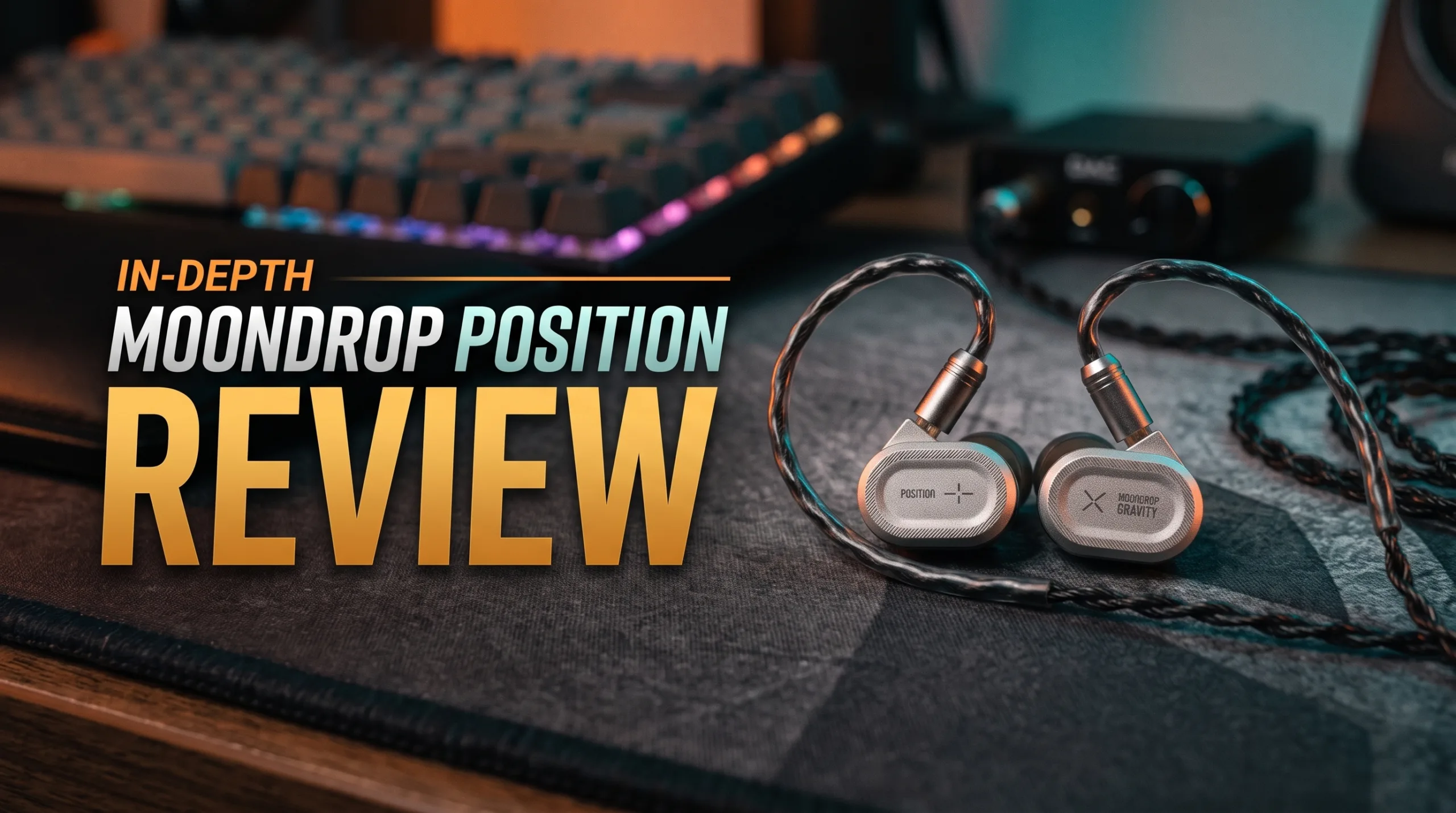
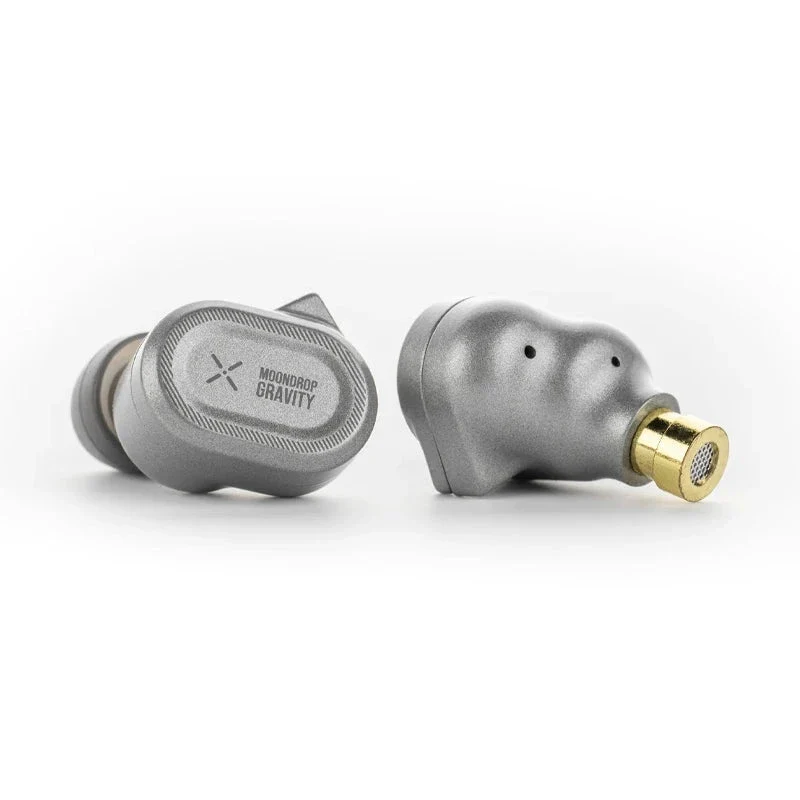
The Moondrop Gravity Position is an entry-level single dynamic driver in-ear monitor priced at $35 USD, launched under Moondrop’s gamer-focused “Gravity” sub-brand. Landing just weeks after the popular Chu 3 ($25), my initial reaction was pure skepticism. In personal audio, slapping a “gaming” label on an earphone usually means three things: bloated muddy bass, shrill treble to fake soundstage, and a 50% price markup for orange accents.
Then something crazy happened in the audio community. Measurement graphs surfaced on squiglink comparing this humble $35 set directly against the $2,300 Letshuoer Sonata. On an IEC711 measurement coupler, their frequency curves were shockingly close. Almost 80% identical in overall tonal balance. That viral comparison made me grab a pair immediately. I’ve spent the last three weeks putting that graph to the test with my own ears across competitive shooters, reference music tracks, and daily sleep tests to see if this is real acoustic engineering or just graph hype.
Moondrop Position Specifications
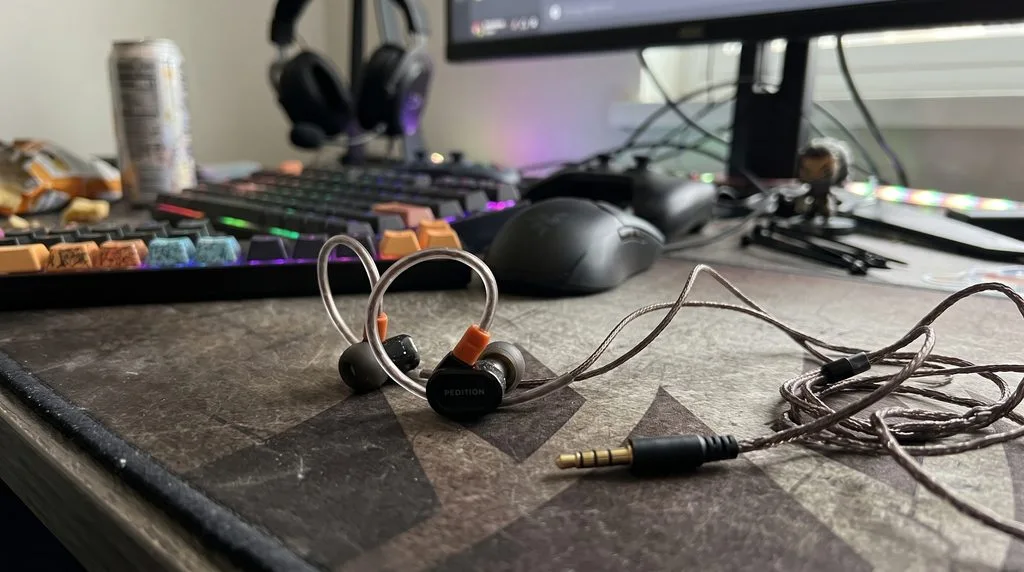
How I Tested the Moondrop Position
To give you an honest, real-world assessment rather than regurgitating manufacturer specs, I lived with the Moondrop Position as my primary audio device for 21 days:
- Source Gear (Zero Fluff): I purposely avoided multi-thousand-dollar desktop amp stacks. I ran these straight from my PC motherboard 3.5mm jack, a basic Apple USB-C dongle, my PS5 DualSense controller, and the included Moondrop DSP dongle. At 18Ω and 119dB sensitivity, you do not need an amp.
- Competitive FPS Benchmarks: I logged over 35 hours in tactical shooters—primarily Call of Duty: Warzone, CS2, Valorant, and Apex Legends—specifically evaluating horizontal/vertical footstep tracking, audio occlusion through walls, and reload sound priority.
- Critical Listening Playlist: Tested across standardized reference tracks:
- Bass Tightness: Daft Punk — “Get Lucky” (checking kick-drum speed and sub-bass recovery).
- Midrange Balance & Sibilance: IU — “Not Spring, Love, or Cherry Blossoms” (evaluating female vocal intimacy and 3kHz ear-gain glare).
- Treble Shimmer & Decay: “Under My Umbrella” (monitoring metallic cymbal sheen and high-frequency peaks).
- The Side-Sleep Endurance Test: Slept wearing the Position for multiple nights on a memory foam pillow to see if the metal shells caused ear-cartilage soreness.
- Microphone Verification: Recorded raw 3.5mm voice samples in Audacity with zero post-processing, and jumped into nightly Discord squad calls while typing on loud mechanical blue switches.
Unboxing & First Impressions
When you slide off the outer sleeve, Moondrop greets you with their signature anime character artwork—complete with front bangs and a subtle smiley face inside the packaging. It’s charming, but the real story is the accessory bundle compared to the Chu 3.
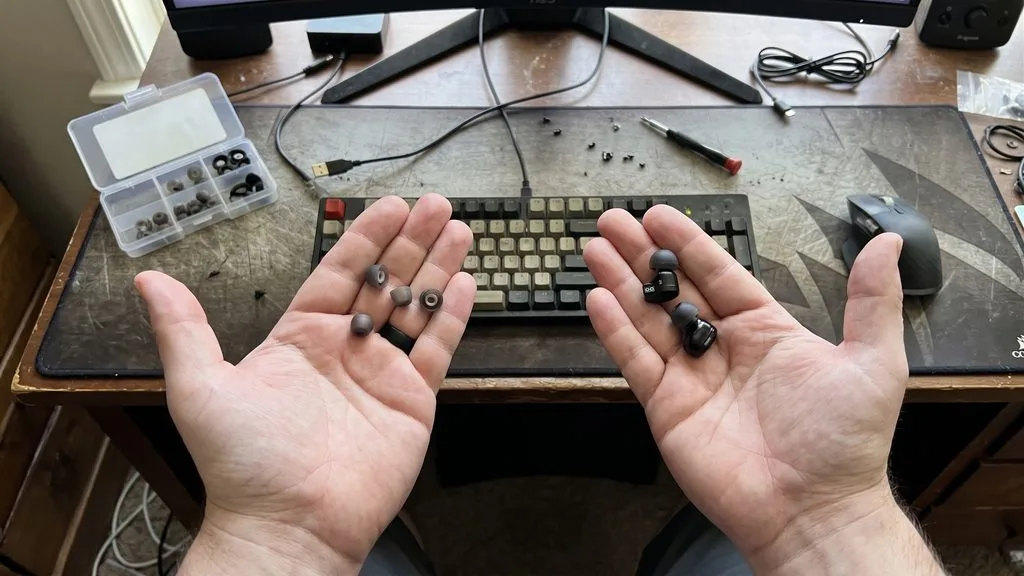
The Chu 3 ($25) gives you a flimsy little fabric pouch and generic tips. The Position ($35) steps it up with:
- A Real Zippered Case: A compact, semi-hard shell case that actually protects the IEMs in your pocket or backpack.
- Upgraded Ear Tips: Instead of generic slippery silicone, Moondrop includes shorter, gummy silicone tips that feel remarkably close to Sony’s beloved EP-EX11 tips. They grip the ear canal firmly and create an airtight seal.
- A Hardware DSP Dongle: The true game-changer of this package.
The Hardware DSP Magic: The included USB-C adapter isn’t just a DAC—it houses an onboard DSP chip with an 8-band parametric equalizer (+12dB to -18dB range). You open Moondrop’s web app on your laptop, adjust your PEQ filters, and the profile gets written directly into the dongle’s onboard flash memory. When I unplugged it from my PC and stuck it into my phone, my custom tuning remained active. No background apps, no driver bloat. That alone justifies the $10 price jump over the Chu 3, especially if you have seen how digital tuning transformed our previous tests in the Moondrop Chu II DSP vs 7Hz Zero 2.
Build Quality
Physically, the Position shares the compact, pill-shaped metal housing of the Chu family, but Moondrop made two smart hardware decisions:
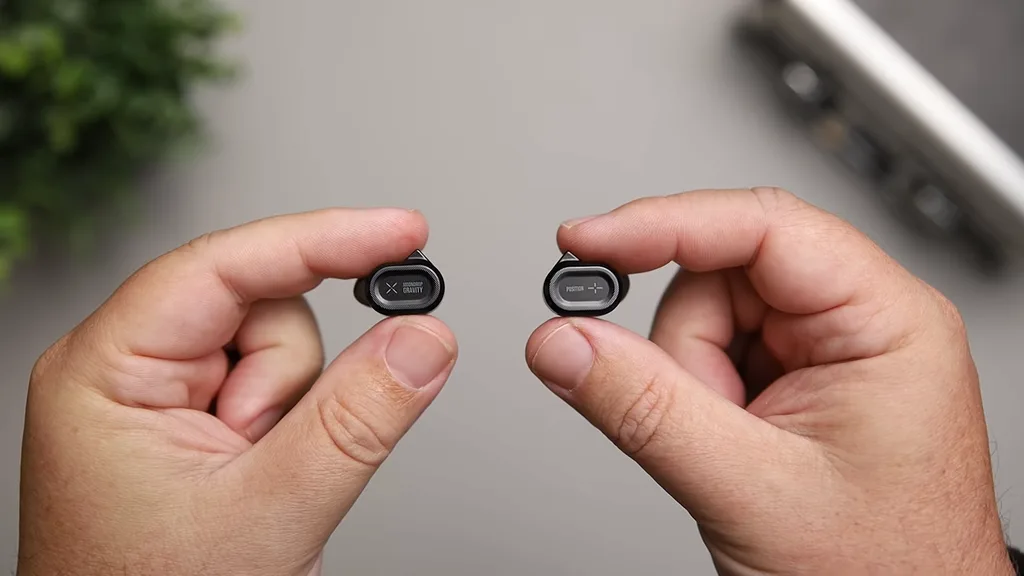
- The Threaded Screw-off Nozzle Returns: Moondrop brought back the screw-off brass nozzle from the Chu 2! This is a massive win for longevity. If earwax clogs your acoustic mesh filter and causes channel imbalance, you can simply unscrew the brass nozzle to clean or swap the filter without destroying the shell.
- Nozzle Length vs. Tip Fit: The brass nozzle is noticeably a millimeter longer than the Chu 3’s. However, Moondrop’s shorter ear tips counteract that extra length. With the stock tips installed, the overall insertion depth remains compact and comfortable.
- The Cable Experience: The cable is a light-gray, ribbed rubber with orange accents at the 2-pin connectors. It’s slightly stiff and doesn’t have a chin slider (because of the inline mic), but it has virtually zero microphonics. When the cable brushed against my zipper or collar, no hollow thumping noise traveled into my ears.
The Real-World Sleep Test: I am a side sleeper who loves falling asleep to podcasts. Because these metal shells are tiny and completely flat, they sink flush into the concha of the ear. While a Chu 3 paired with ultra-shallow SpinFit CP1025 tips is slightly shallower, the stock Position caused zero pressure points against my pillow across multiple nights.
Gaming Performance
Most budget gaming headsets artificially crank up 150Hz mid-bass to make grenade explosions sound thunderous. In competitive gaming, that boomy mid-bass acts like a wall of mud that drowns out footstep frequencies. The Moondrop Position takes the exact opposite approach.
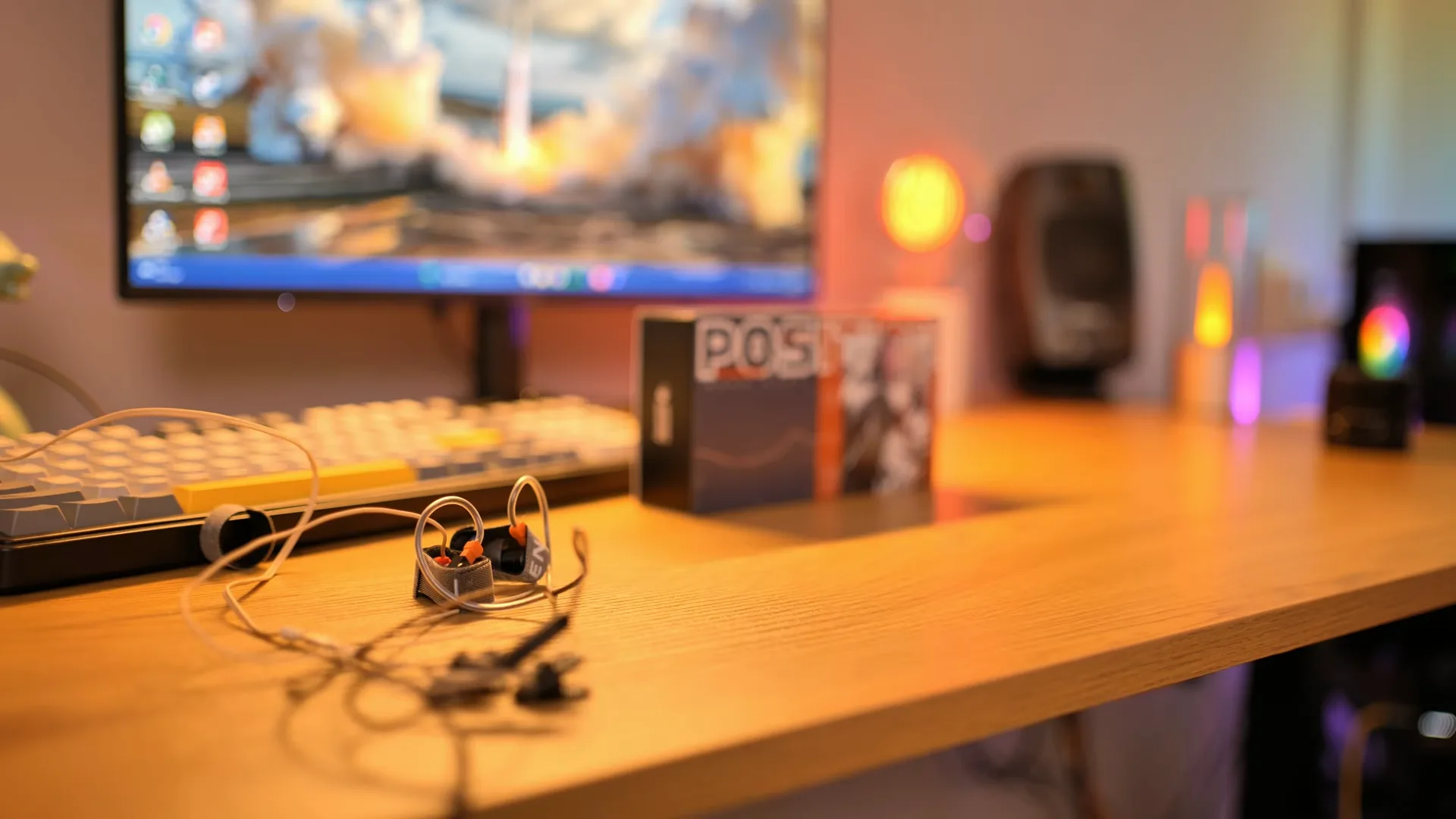
- Footstep Staging in CS2 & Valorant: In CS2, pinpointing sound location on Mirage or Inferno was instantaneous. The forward midrange (1kHz–3kHz) pulls critical cues straight to the foreground. I could easily distinguish whether someone was running on wooden floorboards, jumping onto metal catwalks, or quietly pulling a defuse through smoke.
- Chaos Management in Warzone: During chaotic final-circle gunfights in Warzone, air strikes and close-range shotgun blasts had punchy sub-bass presence, but because the mid-bass is tightly controlled, reload clicks and enemy footsteps behind cover remained completely audible.
- Discord Comms & Microphone Test: The inline microphone features AI voice isolation rather than broad environmental filtering. In my Audacity recordings, speech was clean and articulate without sounding like a muffled tin can. In Discord calls, my teammates confirmed that my mechanical blue-switch keyboard clatter was pushed far into the background.
Sound Quality
Don’t let the gaming box fool you—this is a very capable audiophile-tuned IEM for $35.
Bass Response
Tight, agile, and disciplined. On Daft Punk’s “Get Lucky,” the kick drum impacts with speed and recovery. The sub-bass has clean rumble, but it never bleeds into the lower mids. If you want loose, boomy, skull-rattling bass, you will be disappointed. Dedicated bassheads looking for heavier low-end rumble and warmth should look at dedicated sets like the AFUL Explorer instead.
Midrange & Vocals
The midrange sits slightly forward in the mix. On acoustic tracks, guitar plucks have satisfying presence. Female vocals sound vivid and intimate, as heard on IU’s “Not Spring, Love, or Cherry Blossoms.”
The 3kHz Warning: There is significant ear-gain energy around the 3kHz region. On energetic female pop vocals at loud volumes, it can become slightly intense, prompting me to dial the volume back a click or two. The good news? You can use the included DSP dongle to dial in a gentle -1.5dB cut at 3,000Hz, and the upper-mid glare disappears completely.
Treble Shimmer
This is where the Position punches hardest. On “Under My Umbrella,” hi-hats and cymbals have an authentic metallic shimmer with clean decay. Cheaper IEMs tend to sound splashy and plasticky up top; the Position sounds remarkably refined. While stepping up to planar-hybrid sets like the Simgot EW300 yields slightly crisper transient snap, the Position easily matches the clarity of sets twice its price.
Direct Comparisons: How It Stacks Up Against Rivals
Moondrop Position vs Letshuoer Sonata ($35 vs $2,300)
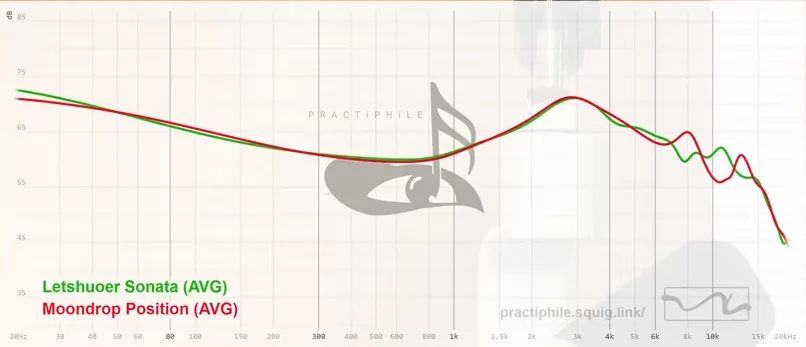
So what does that remaining 20%—and the $2,265 price difference—actually buy you?
- Harmonic Density & Timbre: The $2,300 Sonata reproduces acoustic instruments with a rich, organic timber that dynamic drivers at $35 simply cannot replicate. On the Position, acoustic guitars and male vocals are clean, but they lack that visceral lower-chest body and natural wood resonance.
- Micro-Detail & Driver Speed: During complex multi-layered orchestral passages or heavy gunfights with overlapping audio cues, the Sonata pulls apart micro-textures effortlessly. The Position’s 10mm dynamic driver is impressively agile for $35, but it compresses slightly when the mix gets overwhelmingly dense.
- The Law of Diminishing Returns: This test proved something vital: modern acoustic engineering has matured to the point where exceptional tonal balance is no longer an expensive luxury. Moondrop managed to deliver flagship-grade tuning in a $35 earphone, even if the driver physics still reflect budget realities.
Who Should Buy the Moondrop Position?
-
✓
Competitive FPS Players: Gamers seeking pinpoint directional imaging, clear footstep separation, and crisp Discord voice comms without buying a bulky headset.
-
✓
Budget Audiophiles: Listeners who want fast bass speed, transparent vocal delivery, and refined treble extension under $40.
-
✓
Hardware EQ Enthusiasts: Anyone who wants custom parametric EQ tuning saved directly to hardware for use across mobile, consoles, and PC.
-
✓
Side Sleepers: Users looking for an ultra-compact, lightweight metal shell that sits completely flush against a pillow without painful pressure points.
-
✕
Dedicated Bassheads: Listeners who demand thunderous, vibrating sub-bass slam (the Chu 3 or Dunu Titan X are better suited).
-
✕
Upper-Mid Sensitive Ears: Those who prefer a dark, relaxed upper-mid gain without using EQ (the Bonna Gee is a more forgiving alternative).
-
✕
Braided Cable Purists: Users who dislike slightly stiffer rubberized cables (though it can be swapped with any standard 0.78mm 2-pin cable).
Final Words
Moondrop did the Position a disservice by framing it as a pure gaming IEM. What they actually built is an exceptional, technically refined daily driver that handles competitive gaming, critical music listening, and calls with equal finesse.
Between the metal build, the sleep-friendly shell, the screw-off brass nozzle, the game-changing hardware DSP dongle, and tuning that mirrors multi-thousand-dollar flagships, the Position represents one of the strongest price-to-performance packages available in personal audio today.
FAQs
Clear answers to common questions about performance, pairing, and value.