

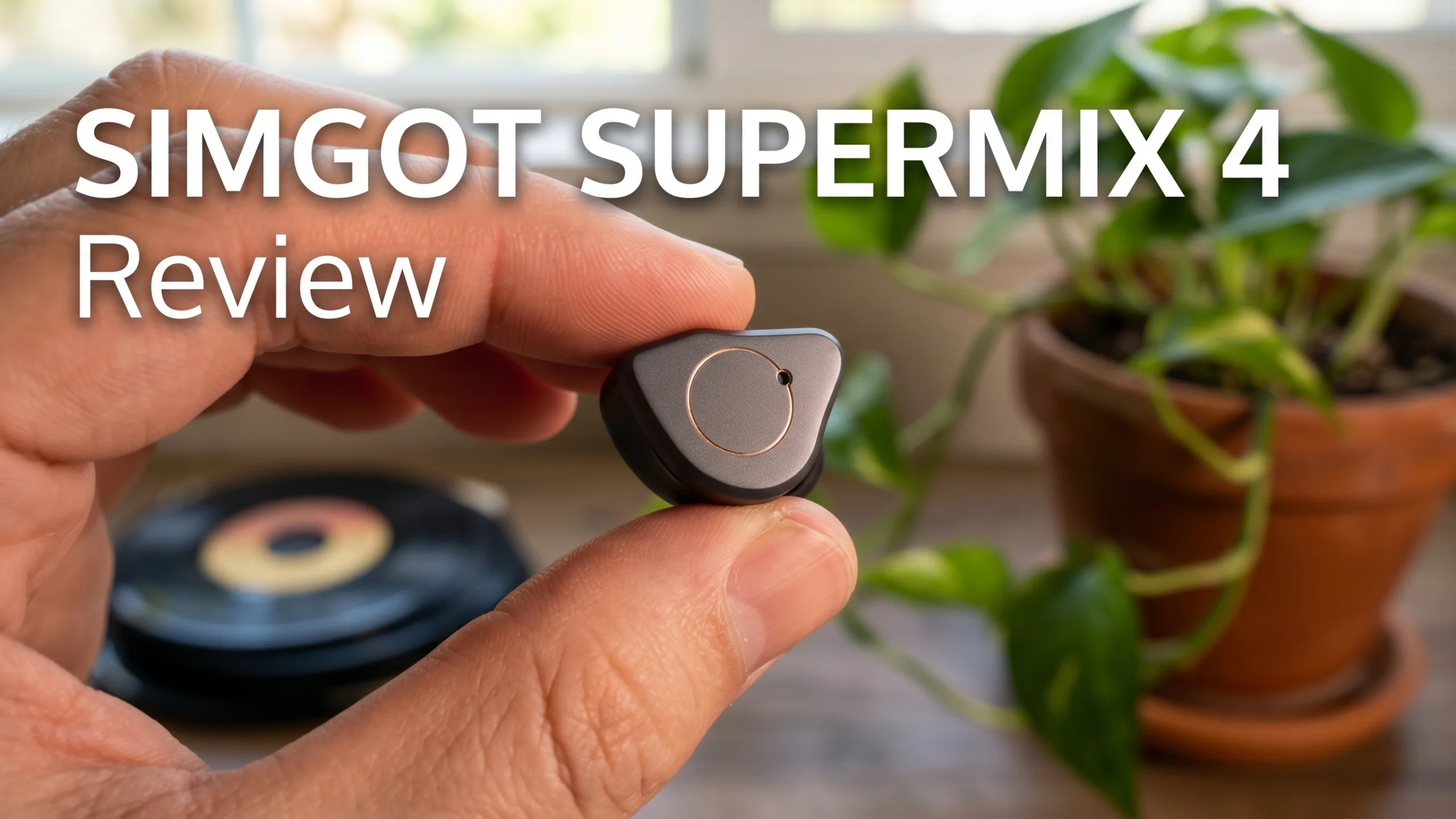
I have spent the last three weeks with the Simgot SuperMix 4 plugged into my ears for hours on end, putting it through everything from high-bitrate FLAC tracks to chaotic lobbies in Call of Duty and Apex Legends. Simgot made massive waves with the EM6L, so cramming four completely distinct driver technologies into a single shell for just under $170 naturally caught my attention.
Below is my hands-on breakdown of what works, what falls flat, and the quirks you need to know before you spend your money.
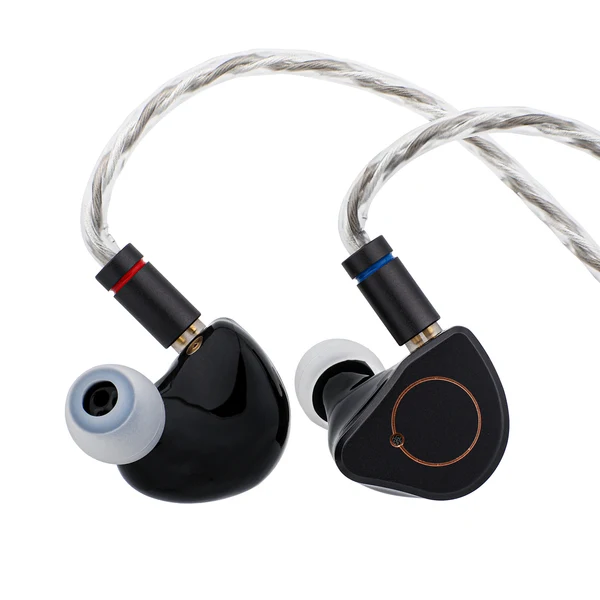
Simgot SuperMix 4 Specification
| Specification | Measurement / Details |
| Driver Configuration | 1 Dynamic Driver (DD) + 1 Balanced Armature (BA) + 1 Micro-Planar + 1 Piezoelectric (PZT) |
| Impedance | 7.2 Ohms (7.2Ω) |
| Sensitivity | 120dB/Vrms |
| Frequency Response Range | 8Hz – 40kHz |
| Nozzle Diameter | 5.7mm (measured via digital calipers) |
| Connector Type | 0.78mm 2-Pin |
| Stock Cable | Silver-plated Oxygen-Free Copper (OFC), 3.5mm single-ended |
| Price | $169.99 |
How I Tested These
I avoid testing gear purely in a vacuum. To see how the drivers behave in real-world conditions, I put the SuperMix 4 through several sources and workloads:
- Sources & DACs: Apple USB-C Dongle, a dedicated desktop DAC/Amp setup running under 0.05Ω output impedance, and high-impedance gaming soundcards (including the Creative GC7) to evaluate source sensitivity.
- Acoustic Measurements: An IEC-711 clone coupler calibrated with an XLR interface to verify channel balance and the frequency curve.
- Music Playlists: A mix of dense orchestral music (Bach Cello Suites), bass-heavy electronic tracks, and raw acoustic recordings to test instrument timbre and resonance.
- Gaming Suite: Over 30 hours across Call of Duty: Warzone, XDefiant, and Apex Legends to test spatial imaging, soundstage width, and gunshot fatigue.
Build & The Critical Nozzle Design
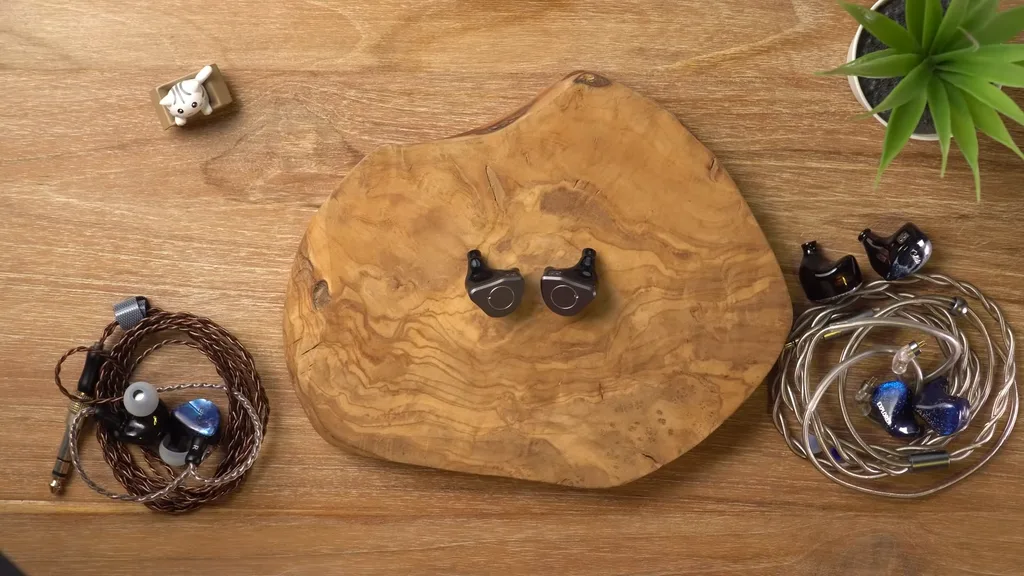
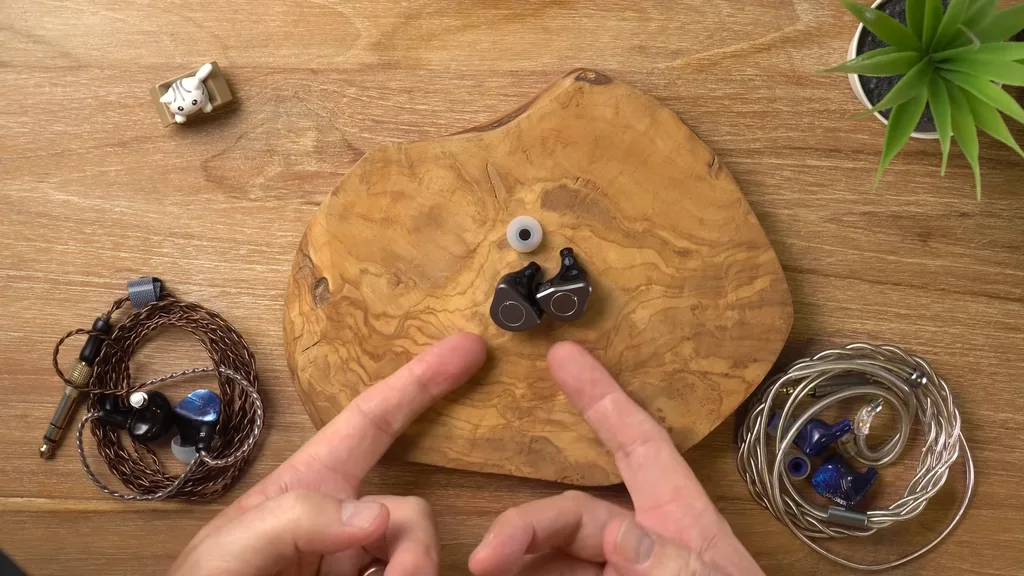
Out of the box, the first thing I appreciated was the shift away from mirror-finish chrome. Simgot went with a dark, matte metal faceplate accented by a subtle gold vent ring, attached to a lightweight, 3D-printed black resin shell. They feel sturdy, do not attract fingerprint grease, and stay featherlight in the ears.
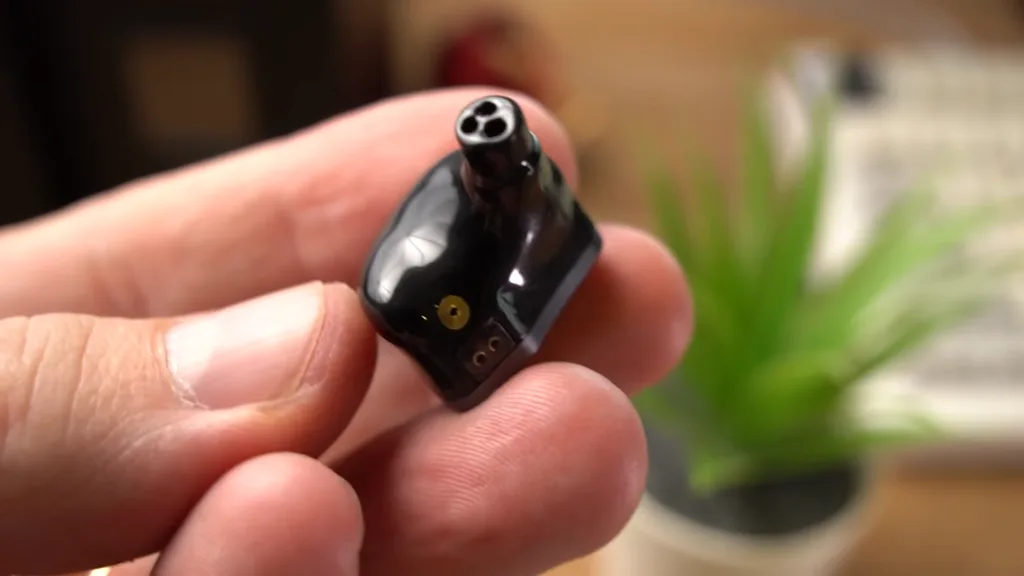
When I grabbed my digital calipers to measure the nozzle, it came out to roughly 5.73mm (slightly oblong, averaging around 5.65mm to 5.7mm). This is comfortably narrower than the massive 6mm+ nozzles flooding the market right now, making them much easier to insert for medium-to-small ear canals.
One practical issue: the nozzle has no retention lip.
Like the EM6L, the stem is completely smooth. Because of this, softer stock ear tips can slip off the nozzle and get stuck in your ear canal when you pull the IEMs out. If you buy these, I strongly recommend swapping out the stock silicone tips for aftermarket tips with a tight, grippy inner core (such as SpinFit CP100+ or Dunu S&S) to stop them from sliding loose.
The included cable is silver-plated oxygen-free copper (OFC). The ear hooks are soft, memory-free, and comfortable without tugging behind your ears. The only packaging letdown is the tip selection: you only get three pairs of basic silicone tips, which feels cheap for a $170 package.
Source Pairing Warning: The 7.2-Ohm Output Impedance Trap
Before talking about sound, this is the single most important detail about this IEM: the impedance sits at an ultra-low 7.2 Ohms.
Most standard IEMs sit between 16Ω and 32Ω. At 7.2Ω, the SuperMix 4 is ridiculously sensitive to the output impedance of whatever source you plug it into. Because this IEM relies on an intricate passive crossover that splits four different driver loads, plugging it into a source with high output impedance will distort the frequency response.
When I plugged the SuperMix 4 directly into high-impedance ports (like certain laptop headphone jacks or the Creative GC7 gaming soundcard, which sits near 10Ω), the sound degraded instantly. The low-end bloated into a muddy mess, and the mid-range lost its separation.
When plugged into a clean, low-impedance source (under 1 Ohm, such as a $10 Apple dongle or an audiophile-grade desktop DAC), the sound completely snapped into place. It is very easy to drive in terms of volume thanks to the 120dB sensitivity, but you must ensure your audio jack has a low output impedance.
Sound Quality
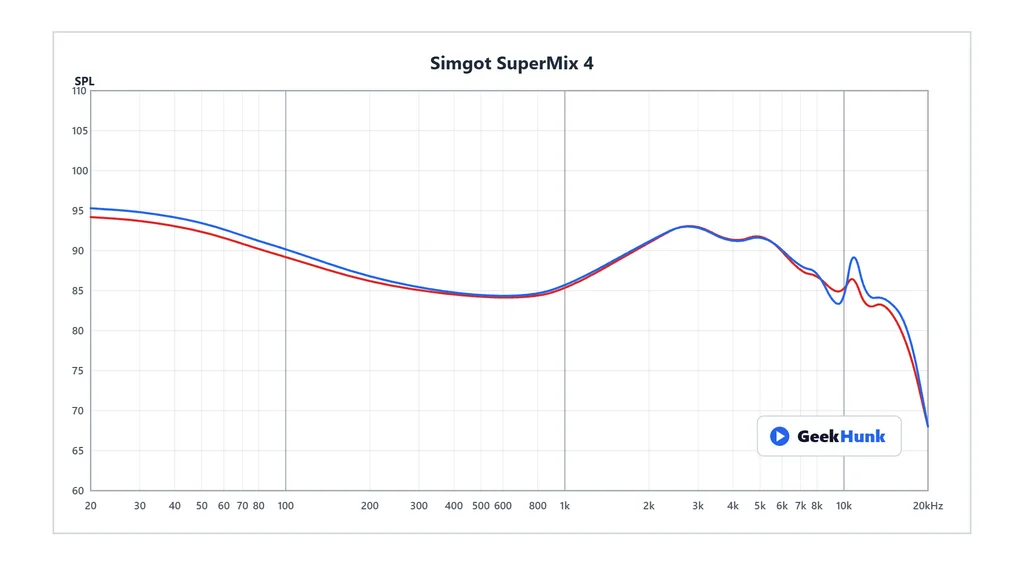
The overall tuning sits right along the Harman 2019 target, but with extra energy and air in the top octave.
Bass (Sub-Bass & Mid-Bass)
The dynamic driver handles low frequencies down to 20Hz with serious authority. The sub-bass rumble is deep, cleanly separated, and delivers visceral impact without muddying the lower mid-range. While bass-heads chasing bloated mid-bass might want a thicker presentation, the speed, texture, and attack here are stellar.
Mid-Range
The mids are slightly forward in the vocal presence region (1kHz to 2kHz). Male vocals sound clean, though slightly lighter in note weight. Female vocals are upfront, crisp, and articulate. In a few poorly mastered tracks, belting vocals can border on shouty at high volumes, but during normal listening, you get outstanding separation where instruments never stumble over each other.
Treble & Detail Retrieval
High frequencies are split between the micro-planar and the piezoelectric (PZT) super-tweeter. This combination gives you insane detail retrieval. Subtle background textures, such as the faint scrape of fingers on acoustic guitar strings, cut through the mix effortlessly.
The compromise is the timbre. PZT tweeters have a distinct snap, and on certain acoustic guitars and brass instruments, I noticed a subtle metallic or “zingy” sheen. It brings out incredible sparkle, but if you are sensitive to brighter treble, it can tire your ears out over long music sessions.
EQ Flexibility
Because the hardware distortion is exceptionally low across all four drivers, this set takes reductive EQ like a champ. Instead of boosting frequencies, pulling down a small notch around the 6kHz to 8kHz region cleans up the slight metallic resonance while leaving the stunning resolution completely intact.
Gaming Performance
Gaming is where the SuperMix 4 transitions from “good” to an absolute powerhouse.
- Call of Duty / XDefiant: The wide horizontal soundstage and sharp imaging make tracing enemy movements seamless. Even when air strikes and grenades are rattling the sub-bass driver, gun reloads and approaching footsteps remain pinpoint sharp.
- Apex Legends: This game was the hardest test. Apex features extremely loud, high-pitched shield-break cues and chaotic ability sounds. Because the SuperMix 4 has prominent upper treble, those sound effects became fatiguing after a couple of matches. Dropping the high-treble slightly via software EQ instantly solved this and let me push the overall volume higher to isolate distant footstep cues.
The spatial accuracy easily beats out bulkier gaming headsets, making it a strong contender for the Best IEM for Gaming by delivering reliable height and depth cues without the claustrophobia common to budget single-dynamic sets.
Microphone & Active Noise Cancellation (ANC)
If you are buying these for team comms or mobile use, keep these two hardware points in mind:
- Microphone Test: The stock cable does not include an in-line microphone. It terminates in a standard audiophile 3.5mm TRS audio plug. For multiplayer gaming or Discord, you will need a dedicated desk microphone (like a USB condenser mic) or an aftermarket 2-pin cable equipped with an in-line boom mic.
- Active Noise Cancellation (ANC): Like all traditional wired audiophile IEMs, there is no Active Noise Cancellation (ANC) or transparency mode. That said, the physical passive isolation is great. The resin shell fits snugly into the concha, and once you achieve an airtight seal with the right ear tips, it naturally blocks out keyboard clatter and PC fan noise.
Head-to-Head Comparisons
| IEM | Price | Driver Setup | Sound Character | Gaming Suitability |
| Simgot SuperMix 4 | $169.99 | 1DD + 1BA + 1Planar + 1PZT | Harman-tuned, ultra-resolving, energetic highs | Exceptional (Pinpoint imaging) |
| Simgot EM6L | $112.49 | 1DD + 4BA | Warmer, smoother vocals, safe treble | Great (Relaxed, less fatiguing) |
| Truthear Nova | $169.99 | 1DD + 4BA | Strict Harman adherence, thicker sub-bass | Good (Large shells hurt fit) |
| Kiwi Ears Orchestra Lite | $249.00 | 8BA | Neutral/clinical, flat bass, zero venting | Very Good (Can cause ear pressure) |
Simgot SuperMix 4 vs. Simgot EM6L
The EM6L has been a top gaming pick for a long time. It sounds warmer and forgives poor recordings. The SuperMix 4, however, resolves far more micro-details, layers complex tracks better, and provides tighter sub-bass control. If you prefer a safer, less fatiguing sound signature, check out my Simgot EM6L detailed review before pulling the trigger.
Simgot SuperMix 4 vs. Truthear Nova
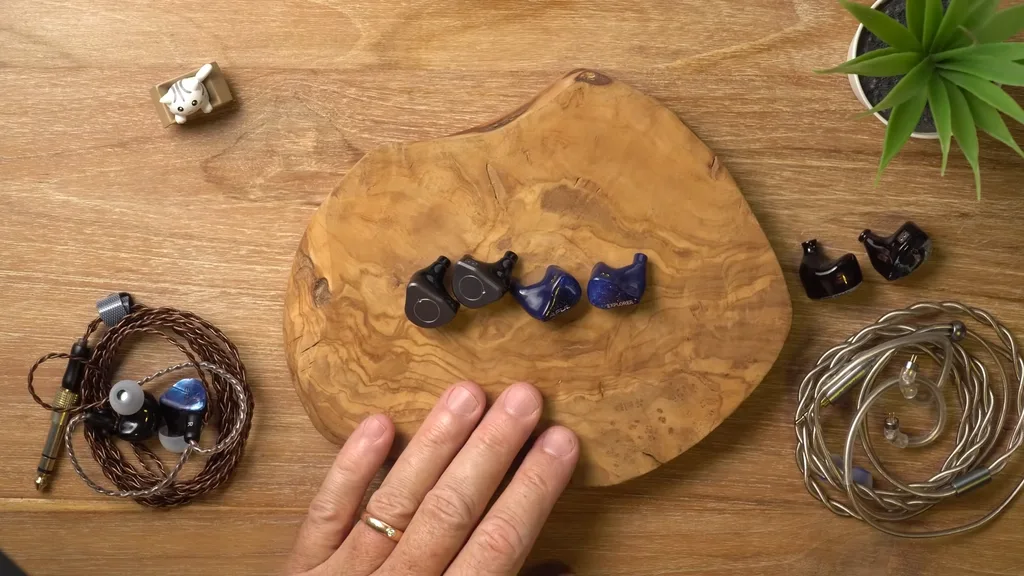
The Nova is another $170 benchmark strictly tuned to Harman 2019. The Nova sounds a bit more natural in its treble timbre without the PZT zing. However, the Nova has massive nozzle shells that hurt my ears after an hour. The SuperMix 4 is far more comfortable, offers better pinna venting, and provides snappier transients.
Simgot SuperMix 4 vs. Kiwi Ears Orchestra Lite
The Orchestra Lite costs $100 more and packs eight balanced armatures. While its midrange is clean and analytical, its completely unvented shells build up uncomfortable air pressure in your ear canals over time. The SuperMix 4 vents pressure much better, delivers far more low-end bass punch, and trades blows in directional gaming accuracy for significantly less cash.
Is the Simgot SuperMix 4 Worth Buying?
The Simgot SuperMix 4 is an impressive technical achievement. Getting four distinct driver types to cross over this coherently at $169.99 is no easy task, and the resulting detail retrieval easily challenges sets twice its price.
Buy it if:
- You want class-leading spatial imaging and detail for competitive FPS gaming.
- You love a crisp, Harman-style tuning with deep, textured sub-bass extension.
- You already own a clean, low-impedance source like a dongle DAC or desktop audio interface.
Skip it if:
- You are sensitive to bright, upper-frequency treble or demand totally natural acoustic timbre.
- You plug your IEMs directly into high-impedance motherboard jacks or legacy audio gear without a dedicated low-impedance DAC.
- You get frustrated when ear tips pull loose from unlipped nozzles.
FAQs
Clear answers to common questions about performance, pairing, and value.