

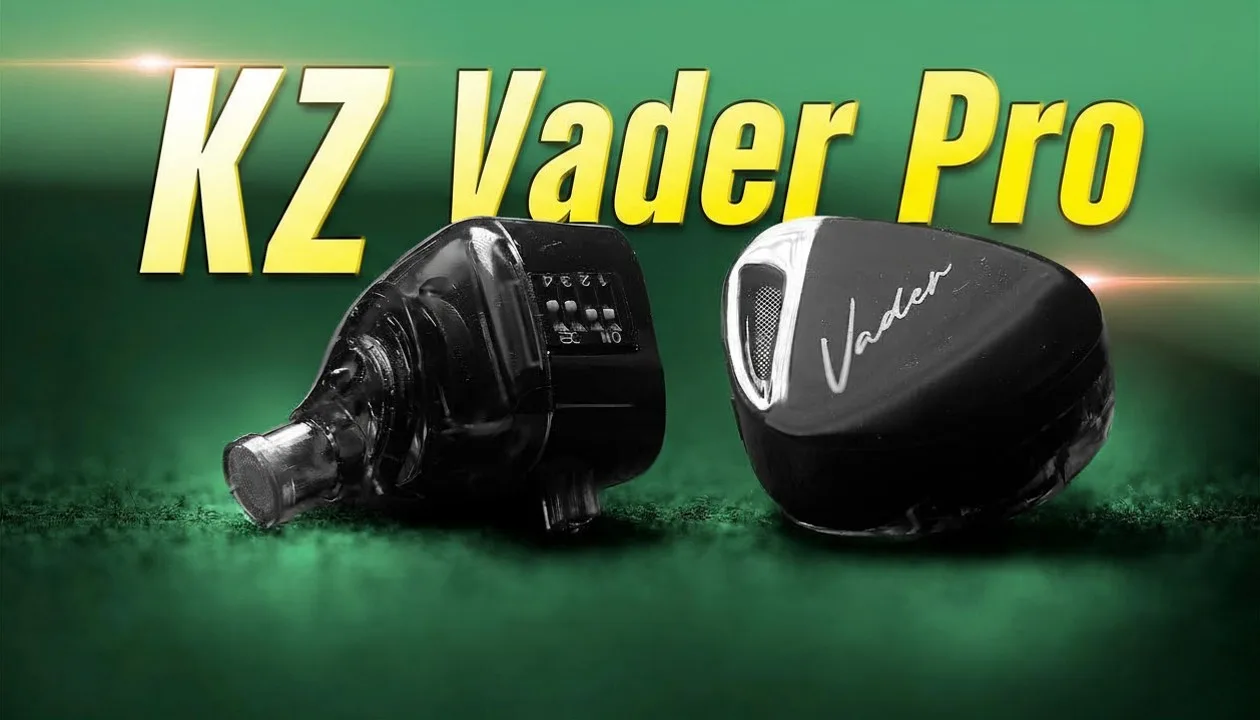
The $30 KZ Vader Pro Bass Edition swaps the original Vader’s fuller sound for thinner, cleaner lower mids and a genuinely excellent upper-mid/treble presentation. If you specifically want that light, airy, bass-boosted-but-lean signature, it’s one of the only options at this price. If you want more body and versatility, the original KZ Vader Balanced or the KZ Caster Pro are better picks for the same money.
What’s in Box
KZ keeps things familiar here. The unboxing experience is basically the standard KZ routine:
- The IEMs themselves
- The usual KZ silver cable
- Three sets of Starline tips in small, medium, and large
- A set of foam tips
The foam tips at least arrive in the bag properly this time, instead of coming out deformed, which is nice. Still, at $30, the accessories package feels a bit behind where the market is heading. With cheaper sets offering stronger bundles, this is one area where KZ is starting to look complacent.
The Cable is Still The Weak Link
The included cable is the same old story. It works, but it feels cheap, looks cheap, tangles easily, and holds memory more than I would like. The left and right indicators on the two-pin connectors are also harder to see than they should be.
Functionally, it gets the job done. Sonically, I have no complaint. But in terms of feel and overall presentation, it belongs on a $10 to $15 set, not something pushing $30. If you pick up the Vader Pro, I would seriously consider budgeting for an upgrade cable.
Design, build, & internals
Build quality is actually one of the better parts of the package. The Vader Pro uses polycarbonate lower shells with metal faceplates, and the shell construction feels solid. The nozzles use the standard KZ mesh for debris protection, and I did not run into driver flex or pressure buildup issues.
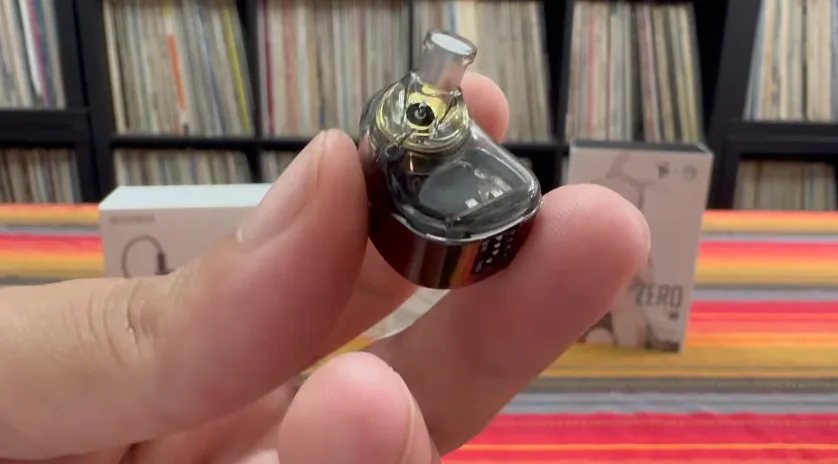
Internally, the Vader Pro is a triple dynamic driver design. The mids and bass drivers sit side by side and feed into a shared acoustic structure, while the treble driver handles the upper range separately. There is also a crossover board and the switch system for the Bass Edition tuning adjustments.
The shell itself feels durable enough to hold up well over time. I would still keep an eye on moisture, since that can become a problem with this style of construction, but as far as physical sturdiness goes, the Vader Pro is put together nicely.
Specs & drivability
KZ does not provide much useful technical detail here. Driver sizes are not listed. Diaphragm materials are not listed. Acoustic cavity specifics are not listed. For a company that likes to talk about holistic design, they sure do love withholding the actual information.
What is easier to say is this:
- The nozzle size is a very normal 6 mm
- The weight is average
- The Vader Pro is easy enough to drive
- It does react to output impedance changes
That last point matters. If you want the intended tuning, use a low output impedance source. If you enjoy impedance tuning tricks, the Vader Pro does respond to them, especially in the bass.
Looks: functional more than flashy
KZ tends to prioritize function over form, and that is exactly what is happening here. The Vader Pro has a basic angular shell design that does not really try to stand out. The clear plastic is a nice touch because you can see the internals, but beyond that, this is not a particularly exciting or memorable design.
Personally, I found it a little bland. That said, this design landed better with the ladies than I expected. The angular styling and general shape apparently work for some people, even if I was not especially moved by it myself.
Comfort & Fit
Comfort is one area where KZ usually does a competent job, and the Vader Pro follows that trend. The shell shape is fairly conventional. There are no weird protrusions, comfort wings, or strange bulges. For my ears, that translated to an easy fit and long listening sessions without discomfort.
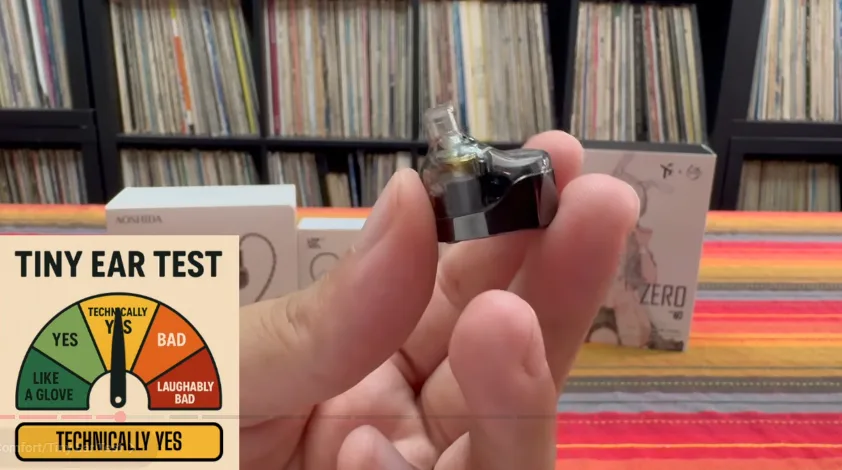
There is one caveat. The shells are on the larger side.
On the tiny ear test, the Vader Pro technically passed. A smaller-eared user could get and maintain a seal, but the shell size and weight made long-term comfort less ideal. They also looked huge once inserted. So if you have smaller ears, fit may be acceptable, but comfort over time is less certain.
The two Vader Pro versions and the switch system
This is where things get a little more interesting. There are actually two different Vader Pro variants on sale:
- Standard version, tuned closer to Harman and without switches
- Bass Edition, which adds four tuning switches
The Bass Edition is the one under discussion here. Those four switches create 15 available tuning combinations, but the practical effect is narrower than that sounds. The switches mainly alter the bass and lower mids. They do not really reshape the upper mids or treble in a meaningful way once volume is normalized.
My preferred switch setting was the first switch on and the remaining three off. That configuration gave me the best result of the bunch, and all listening impressions here are based on that setting.
Unfortunately, this is also where one of my biggest frustrations begins. The Vader Pro technically gives you 15 tunings, but they all orbit the same core identity. No switch setting fixed the lower mids for me.
|
Sound Impressions
Bass: enough quantity, not enough satisfaction
The Vader Pro does deliver bass, and depending on the switch setting, it can deliver a lot of it. The issue is not quantity. The issue is texture and physicality.
Across every switch configuration I tried, the bass had a softness to it. Low notes are present, and you do not miss them, but they lack that satisfying weight on impact and that convincing decay afterward. Bass drops and low-end hits come through more as information than as a tactile event.
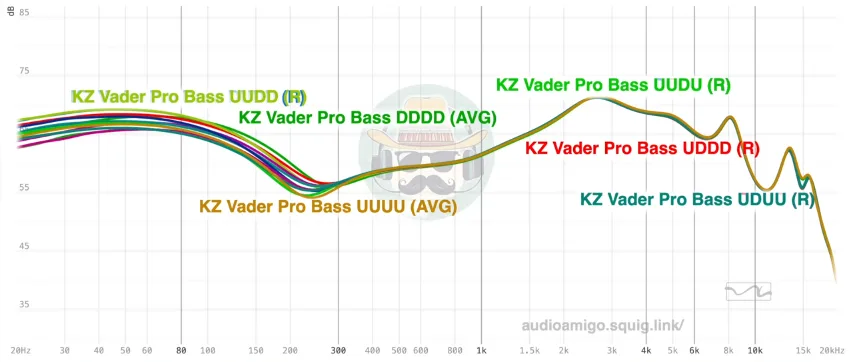
That problem continues into the midbass. Bass guitars and kick drums are audible and reasonably separated, but they do not have the bite, grunt, or buzzy energy I want. You get the note, but not the excitement behind the note.
So the verdict on the low end is pretty simple: good bass amount, underwhelming bass quality.
Mids: the lower mids are the dealbreaker
This is the part of the tuning that made the Vader Pro a tough sell for me.
The lower mids are pushed back hard in order to keep the bass isolated and create that detached subwoofer-style presentation some people love. The result is a midrange foundation that sounds thin, papery, cold, and undernourished.
Male vocals are where this stood out most clearly. Tracks that should sound grounded and emotionally present instead came across as clinical and lean. Even on the warmest switch configuration, the lower mids never gained enough body to sound natural to me.
Now, to be fair, this exact tuning choice will appeal to some listeners. There are people who genuinely want the cleanest possible lower mids and do not mind giving up richness to get there. If that is you, the Vader Pro may make a lot more sense.
The rest of the midrange fares better. Female vocals in particular benefit from the tuning. Because the lower mids are tucked, upper-mid vocal presence comes forward nicely. Female vocal lines sound clear, energetic, and easy to focus on, which does give the Vader Pro a distinct strength if that is what your library leans toward.
Upper mids and treble: the best part of the set
If there is one part of the Vader Pro that I think KZ really nailed, it is the upper mids and treble.
This set has an energetic top end, but it is not sloppy. There is sparkle when the track calls for it, smoothness when it needs to back off, and enough air to keep things open. Harmonics on female vocals come through with very nice depth and liveliness, and percussion has good edge definition without becoming a constant fatigue machine.
That does not mean it is risk-free. There is a touch of shout lurking in the upper mids, and if you are especially sensitive to forward vocal gain, this may still be too much. But for my ears, KZ kept it mostly under control.
Treble performance is similarly solid. Bells, chimes, cymbals, and sharper percussion details come through cleanly. The decay feels natural enough, the cymbal wash is convincing, and the overall presentation is crisp without sounding brittle. For this tuning style, the top end is easily the strongest part of the package.
Technical performance
The Vader Pro is a bit uneven technically.
Low-end detail exists, but because bass texture is soft, finer bass information does not feel very rewarding. On the other end, the elevated and well-executed treble helps certain high-frequency details stand out nicely.
Where it falls short is in overall resolving ability. Background details that should emerge a little more naturally often require extra volume and concentration. Compared to stronger performers in or near this bracket, the Vader Pro does not really distinguish itself on raw resolution.
I would place its technical performance closer to something like the Ulua Ultra than to stronger sets like the Aoshida E20 or the Truthear Zero Blue.
Soundstage & Imaging
One pleasant surprise is the staging performance. Stereo separation is actually pretty good here. The Vader Pro does not feel cramped or stuck entirely inside the head, and it handles lateral movement with decent width.
Perceived 3D staging is also respectable for the price. Instruments and vocals occupy their own spaces reasonably well, and imaging remains stable enough to support tracks with strong spatial cues.
It is not a giant-killer in this category, but it is a little above average for a budget IEM around this price.
What Impedance Adapters Do
The Vader Pro changes noticeably with impedance adapters or higher output impedance sources. In every switch configuration, added impedance boosts the bass by a clear amount.
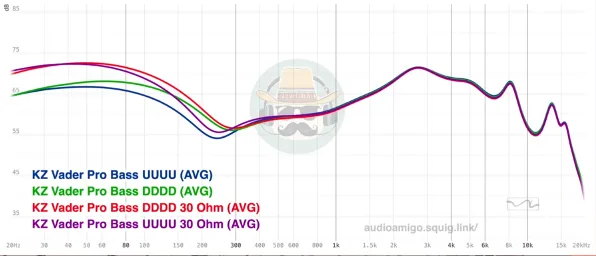
That means there is some basshead potential here if you enjoy experimenting and do not mind a little extra buzziness at louder volumes. But it is important to be realistic about what this can and cannot fix.
Impedance can increase bass quantity. It does not solve the core lower-midrange problem. If the thinness of the mids bothers you, adapters are not going to rescue the tuning.
The tuning in one sentence
The KZ Vader Pro Bass Edition is a Harman-inspired budget IEM with boosted bass, elevated upper mids, and a lower midrange that ranges from very tucked to excessively hollow depending on switch position.
How it compares
KZ Castor Pro Bass
The Castor Pro Bass costs a little less and, for my preferences, is the more satisfying listen. It still gives you a controlled presentation and clear vocals, but it sounds less shouty and far less thin through the lower mids.
If you like some tuning flexibility and want something that can sound cleaner without completely draining the body out of the mids, the Castor Pro Bass makes more sense.
Original KZ Vader Balanced
This is the comparison that hurts the Vader Pro the most.
The original Vader Balanced already offered three drivers and tuning flexibility at the same price. It still had some of that softness in bass texture, but the richer lower mids made it a much more enjoyable and dynamic listen overall.
In practice, the original Vader feels more versatile. It can lean cleaner if you want, but even in its leaner settings it still carries more body than the Vader Pro does in its warmest one. That is kind of wild.
If you want a Vader, I would still lean toward the original Balanced version.
Aoshida E20
The E20 is an interesting comparison because it often drops into a similar street-price conversation during sales. It is not as bassy as the Vader Pro, but it also uses a tucked lower-mid strategy to create a cleaner, more forward presentation.
The difference is in execution. The E20 sounds lean without sounding lifeless. It is better balanced, better built, and has better bass quality. If you enjoy this general tuning direction but want a more refined version of it, the E20 is the upgrade path.
Truthear Zero Blue
The Zero Blue remains one of the better-known Harman-style options under $60, even with its own lean lower mids. Compared with the Vader Pro, the Zero Blue has better bass texture, better balance, and a much more satisfying overall execution of the subwoofer-style idea.
The Vader Pro can be seen as a budget attempt at that flavor, but it never really closes the gap. The lower mids are even thinner here, and the bass quality does not keep up.
If this is exactly the kind of tuning you want and you can save a bit more, the Zero Blue is still the stronger move.
Where the Vader Pro Lands Overall
I do not think the Vader Pro is a bad IEM. I really do not. It is just one of those sets where the tuning choice is so specific that it limits who should actually consider it.
The biggest disappointment is that the Pro label does not feel earned. The original Vader was more flexible and, to my ears, more musically satisfying. The switches on the Vader Pro look impressive on paper, but in practice they mostly make small bass changes while leaving the same lower-mid identity intact.
That lack of real versatility matters. With other KZ switch-equipped IEMs, I can usually find at least one setting that gives me a distinct alternate personality. Here, I never found a setting that solved the core tonal issue.
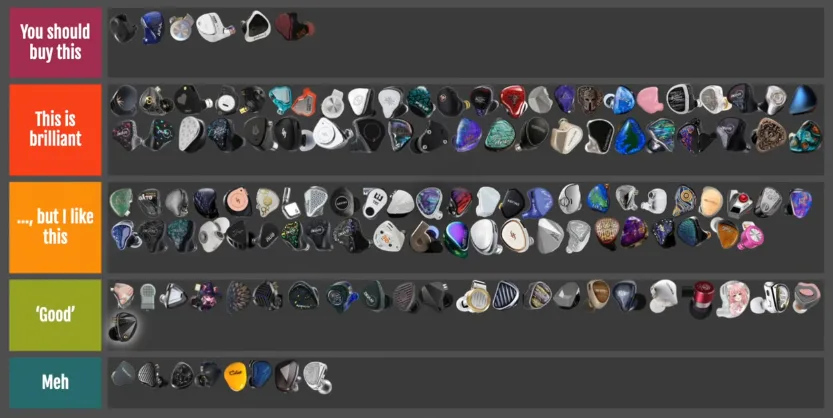
Because of that, the Vader Pro lands in the good tier for me rather than anything higher. There is a legitimate audience for this tuning, and people in that niche may enjoy it quite a bit. I am just not part of that audience.
Who Should Buy The KZ Vader Pro Bass Edition?
You should consider the Vader Pro if all of the following sound appealing:
- You want a light, airy, very clean midrange presentation
- You like forward upper mids and energetic treble
- You want a decent amount of bass without needing rich mids
- You are specifically shopping at this price and cannot stretch another $20 or more
If that is your exact lane, then yes, the Vader Pro makes sense. There really are not many alternatives at this price that deliver this exact combination.
On the other hand, if you want versatility, richer mids, more natural male vocals, or a more balanced take on the Harman style, I would look elsewhere first. The KZ Castor Pro Bass, the original Vader Balanced, the Aoshida E20, and the Truthear Zero Blue all make stronger cases depending on your budget.
Final Words
The KZ Vader Pro is not a disaster. It is a sidegrade at best, not the meaningful upgrade the name suggests.
It has strong treble tuning, decent staging, solid comfort for average ears, and enough bass to satisfy people who like a boosted low end. But the lower mids are so pulled back that the whole presentation can sound thin, sterile, and emotionally flat.
If that clean-and-lean sound is exactly what you want, the Vader Pro is a reasonable value. If not, the original Vader Balanced and the Castor Pro Bass both feel like safer and more versatile bets.