

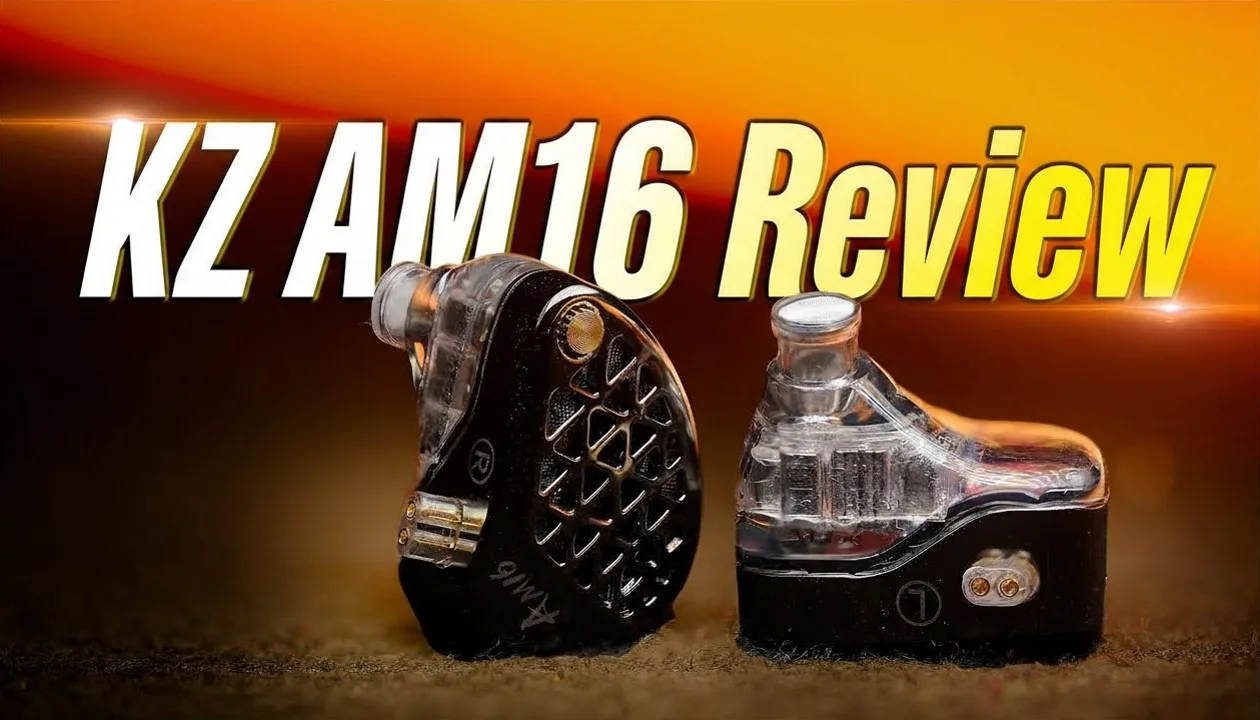
KZ has never been afraid to experiment with affordable in-ear monitors, but the KZ AM16 feels like one of its boldest releases yet. Instead of following the familiar hybrid formula that combines dynamic and balanced-armature drivers, KZ decided to go all-in with an eight-balanced-armature-driver configuration per side. Even more surprising is the price. At around $60, the AM16 is one of the most affordable all-BA IEMs currently available.
Naturally, I was curious.
Balanced armature earphones have always had a reputation for delivering exceptional detail and speed, but they often struggle to reproduce bass with the same authority as dynamic drivers. That made me wonder whether KZ had finally found a way to bridge that gap without pushing the price into premium territory.
After spending several days listening to the AM16 with everything from EDM and rock to acoustic recordings, podcasts, orchestral music, and movie soundtracks, I came away with mixed—but mostly positive—impressions. It isn’t perfect, and there are a few decisions that left me scratching my head, but there’s no denying that KZ has created something genuinely interesting here.
In this review, I’ll walk you through everything I experienced, including the design, comfort, sound quality, technical performance, comparisons, and whether the KZ AM16 deserves a place in your collection.
Quick Verdict
If you don’t want to read the entire review, here’s the short version.
The KZ AM16 is one of the most technically capable IEMs KZ has released in this price range. It delivers impressive clarity, excellent instrument separation, and surprisingly satisfying bass considering it’s powered entirely by balanced armature drivers.
The downside is that the accessories don’t match the asking price. The included cable feels cheap, the unboxing experience is basic, and listeners who are sensitive to bright upper mids may find the tuning a little energetic.
Still, once the music starts playing, many of those complaints become much less important.
Rating: 8.8/10
Pros
Cons
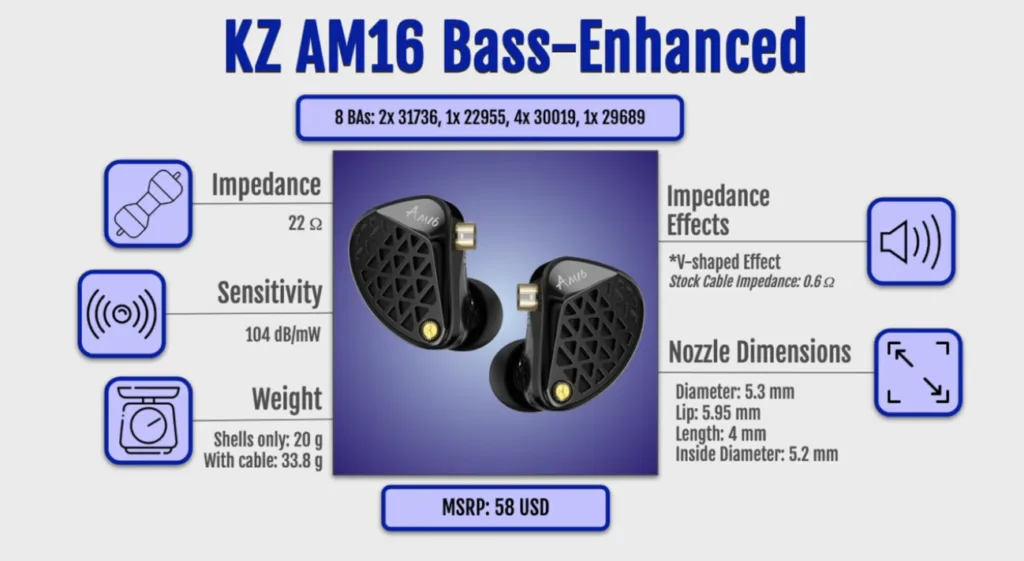
Specifications
| Product | KZ AM16 |
| Driver Configuration | 8 Balanced Armatures per side |
| Driver Type | All Balanced Armature |
| Connector | QDC 2-pin |
| Cable | Detachable |
| Nozzle Size | Under 6 mm |
| Weight | Around 10 g per earpiece |
| Price | Around $58–$60 |
What’s in the Box?
I have to admit, the unboxing experience was the first thing that disappointed me.
Considering the AM16 sits above many of KZ’s budget offerings, I expected something that felt a little more premium. Instead, opening the box reminded me of almost every other KZ IEM I’ve used over the years.
Inside the package, you’ll find:
- KZ AM16 earphones
- Standard detachable cable
- Three pairs of KZ Starline silicone ear tips
- User documentation
That’s it.
The included Starline ear tips are perfectly usable and have been a staple in KZ products for years, but this feels like a missed opportunity. KZ already makes better silicone tips and higher-quality upgrade cables, yet none of those accessories made it into the box.
For a product approaching the $60 mark, I honestly expected a little more.
The good news is that the lack of accessories doesn’t affect the listening experience, but it does make the AM16 feel less premium than its price suggests.
Design & Build Quality
At first glance, there’s no mistaking the AM16 as a KZ product.
The overall shell shape follows the company’s familiar design language, combining a resin inner shell with a metal faceplate. It’s a look we’ve seen before, but it still manages to feel modern and well-built.
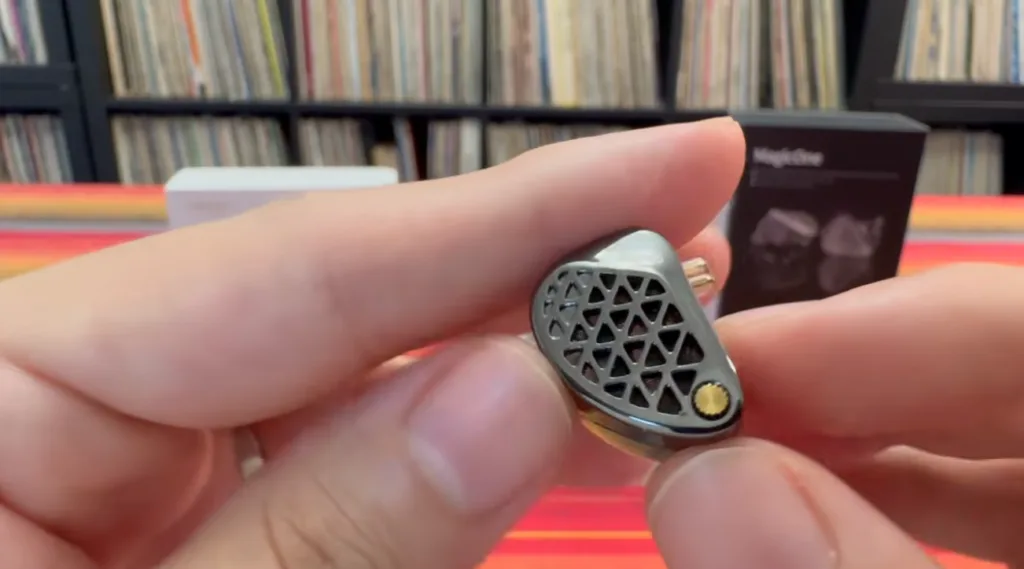
The faceplate uses a textured pattern that gives the earphones a clean industrial appearance without being overly flashy. Personally, I would have liked a little more visual flair or colour, but I know many listeners prefer understated designs.
In the hand, the AM16 feels reassuringly solid.
The resin body is smoothly finished, the metal faceplate adds rigidity, and there are no obvious gaps or rough edges. It doesn’t feel like a cheaply assembled product.
One feature I particularly appreciated is the vented design. Multi-balanced armature earphones can sometimes create uncomfortable pressure inside the ear, but the AM16 handled this surprisingly well. During extended listening sessions, I noticed very little pressure buildup compared to several other all-BA IEMs I’ve tested.
That said, there are still a few concerns.
The QDC connectors have never been my favourite connection system. While they work well enough, they’re generally more prone to wear over time than recessed 2-pin connectors if you’re someone who frequently swaps cables.
Overall, though, build quality leaves a positive first impression. The AM16 feels durable enough for everyday use, even if its design doesn’t reinvent the wheel.
Comfort & Fit
Comfort is always one of the first things I pay attention to when reviewing an IEM because even the best sound means very little if I don’t enjoy wearing it for long listening sessions. Fortunately, the KZ AM16 gets most of the basics right, although it isn’t without a few compromises.
The shell follows KZ’s familiar ergonomic shape, so if you’ve used recent KZ earphones like the Vader, Caster, or Zenith series, the fit will feel immediately familiar. The nozzle measures just under 6mm, making it compatible with a wide variety of aftermarket ear tips. I had no trouble getting a secure seal using the included Starline tips, although I eventually switched to a softer pair of silicone tips that improved comfort slightly.
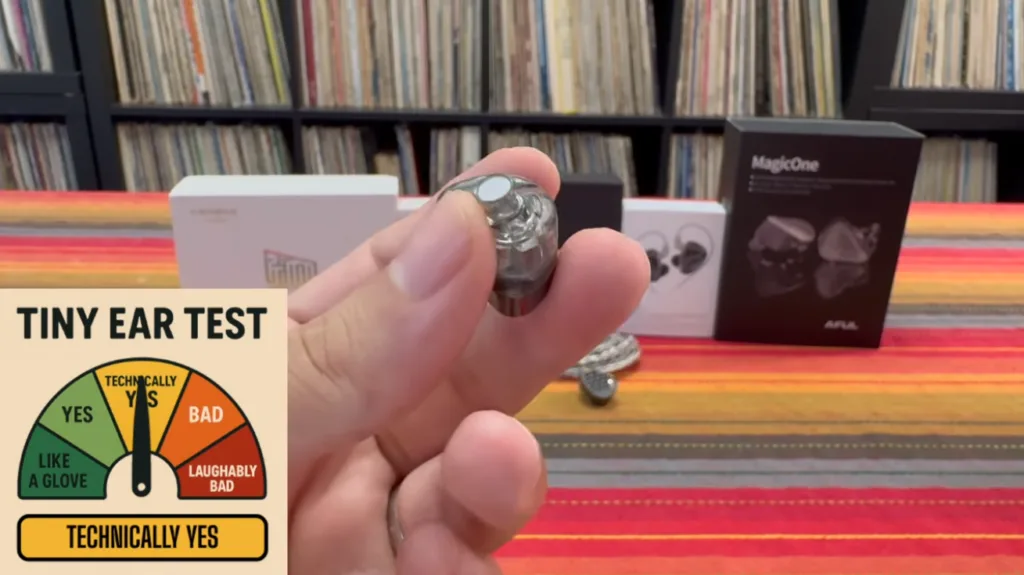
During shorter listening sessions, the AM16 almost disappeared in my ears. It felt secure enough for walking around the house, working at my desk, and even a quick workout without constantly needing adjustment.
The only downside comes from the metal faceplate.
While it certainly makes the earphones feel more premium, it also adds noticeable weight. After around 40 minutes, I started becoming aware of that extra weight pulling slightly against my ears. It never became painful, but it was enough that I occasionally took a short break before jumping back into another album.
If you have larger ears, I doubt this will be a major issue. Those with smaller ears, however, may find the AM16 a little bulky during extended listening sessions.
Overall, I’d describe the comfort as good rather than excellent. It’s comfortable enough for daily use, but there are lighter IEMs in this price range that disappear more easily during marathon listening sessions.
Comfort Rating: 8.5/10
Sound Quality
Now we arrive at the most important part of this KZ AM16 Review.
This is where the AM16 begins to justify its price.
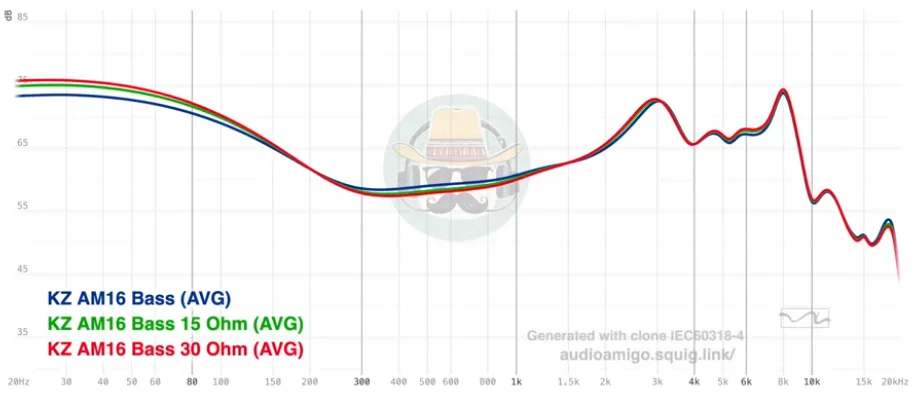
Unlike many budget KZ releases that immediately grab your attention with exaggerated bass or piercing treble, the AM16 feels noticeably more refined. It still follows a familiar V-shaped tuning, but it presents music with better balance and noticeably higher technical ability than many of KZ’s cheaper models.
Over the course of my testing, I listened to everything from Daft Punk, Massive Attack, and Linkin Park to Norah Jones, Adele, Hans Zimmer, and several live acoustic recordings. This gave me a good sense of how the AM16 handles different genres and recording styles.
Bass Performance
Bass was the biggest surprise.
Whenever I hear that an earphone uses only balanced armature drivers, I immediately expect one thing: clean bass, but not particularly exciting bass.
The AM16 challenged that expectation.
No, it doesn’t deliver the physical slam or natural texture of a good dynamic driver, but it’s much closer than I anticipated.
Sub-bass reaches surprisingly deep, adding satisfying rumble to electronic music and cinematic soundtracks. Tracks with sustained low-frequency notes remain clean and well controlled, even when several bass layers are playing simultaneously. Instead of becoming muddy, each bass note remains distinct, making complex recordings sound organised rather than congested.
Mid-Bass
Mid-bass also deserves praise.
Kick drums have enough punch to keep rock and pop tracks engaging, while bass guitars retain excellent definition. Rather than overwhelming the rest of the frequency response, the low end stays disciplined and quick.
This speed is one of the biggest advantages of the AM16.
Bass notes start and stop with impressive precision, giving fast-paced music an energetic and responsive character.
Where it still falls behind dynamic-driver competitors is in texture.
Listening to acoustic bass or live drum recordings, I noticed that notes lacked some of the natural weight and physical impact that dynamic drivers reproduce so effortlessly. There’s plenty of detail, but not quite the same sense of air moving behind each note.
Even so, this is easily some of the most satisfying bass I’ve heard from an affordable all-balanced-armature IEM.
Midrange Performance
The midrange follows KZ’s familiar tuning philosophy, and whether you enjoy it will largely depend on your personal preferences.
Vocals sound clean, articulate, and highly detailed, but they aren’t the main focus of the presentation.
Instead, they’re positioned just slightly behind the bass and treble, creating a presentation that feels lively without becoming vocal-centric.
Male vocals have good clarity, although I occasionally wished they carried a little more warmth. Acoustic guitars, pianos, and lower-register instruments sound slightly leaner than they do on more neutral earphones.
Female vocals fare a little better.
Singers have excellent clarity and enough energy to remain engaging throughout long listening sessions. However, there were moments when I found myself wishing vocals stepped just a little further forward in the mix.
It’s not a deal-breaker by any means. The AM16 still reproduces voices naturally enough to enjoy podcasts, acoustic performances, and vocal-heavy music, but listeners who prioritise lush, intimate vocals may prefer something tuned closer to neutral.
Overall, the midrange feels clean, detailed, and transparent rather than warm or romantic.
|
Treble Performance
Treble can often make or break an IEM, especially one built entirely around balanced armature drivers. It’s also the area where manufacturers sometimes push too hard in an attempt to create the illusion of extra detail. Fortunately, the KZ AM16 avoids that trap for the most part.
From the first few tracks I listened to, it was clear that KZ was aiming for an energetic top end rather than a smooth or relaxed presentation. There’s plenty of sparkle, but it rarely crosses the line into being painfully sharp.
Listening to acoustic recordings, cymbals had a crisp attack and enough shimmer to sound lively without becoming splashy. Hi-hats were clearly defined, and small background details that often get buried on cheaper IEMs remained easy to hear. Whether I was listening to jazz ensembles or modern pop, the treble helped create a sense of openness that made the overall presentation feel larger than expected.
Where the AM16 occasionally shows its budget roots is in the upper treble. Certain recordings revealed a slightly artificial edge that reminded me I was listening to balanced armatures rather than dynamic drivers. The decay of cymbals wasn’t always as natural, and some electronic percussion sounded a touch sharper than it should.
That said, I never found the AM16 fatiguing during normal listening volumes. Only when I pushed the volume higher than usual did the upper mids and lower treble begin to demand a little more attention.
If you’re particularly sensitive to bright earphones, this is something to keep in mind. However, if you enjoy a lively presentation with plenty of clarity and sparkle, I think you’ll appreciate what the AM16 brings to the table.
Technical Performance
The KZ AM16 delivers impressive technical performance for its price. Thanks to its eight balanced armature drivers, it sounds clean, fast, and highly resolving. Complex tracks remain well organised, allowing instruments to breathe instead of blending together. While it doesn’t outperform premium IEMs, it easily stands out among most competitors in the under-$100 category.
Detail Retrieval
Detail retrieval is one of the AM16’s biggest strengths. It reveals subtle background sounds, vocal nuances, and instrument textures without sounding overly analytical. Compared to most budget dynamic-driver IEMs, the AM16 offers a noticeable step up in clarity and resolution, making familiar songs sound more refined.
Instrument Separation
The AM16 handles busy tracks with ease. Guitars, drums, vocals, and other instruments remain clearly separated, even during complex passages. This clean presentation makes long listening sessions more enjoyable and helps the music feel less congested.
Imaging
Imaging is accurate and consistent, making it easy to pinpoint where instruments and vocals are positioned within the mix. It also performs well in games, offering precise directional cues for footsteps and environmental sounds.
Soundstage
The soundstage is above average for an IEM in this price range. It isn’t exceptionally wide, but it creates enough space for music to feel open rather than confined. Live recordings and orchestral tracks especially benefit from its natural sense of width and depth.
Timbre
For an all-balanced armature IEM, the AM16 delivers surprisingly natural timbre. Some instruments still carry the typical BA character, but it never becomes distracting. Instead, the presentation feels clean, fast, and enjoyable across most genres.
Gaming & Movie Performance
Although music remains its primary focus, I spent several evenings using the AM16 for gaming and streaming movies.
It performed surprisingly well in both situations.
Dialogue remained clean and intelligible, while action scenes benefited from the earphones’ excellent separation and imaging.
Explosions carried enough impact to feel exciting without overwhelming voices, and environmental effects remained easy to identify throughout longer gaming sessions.
For competitive games like Valorant or CS2, positional audio proved accurate enough to help identify enemy movement with confidence.
While dedicated gaming headsets still offer convenience through built-in microphones, the AM16 easily competes when pure audio quality is the priority.
Is the KZ AM16 Worth Buying?
After spending considerable time with the AM16, my answer is yes—but with realistic expectations.
- This isn’t a perfect IEM.
- The accessories feel inexpensive.
- The included cable belongs on a much cheaper product.
- Comfort is good rather than exceptional.
- The tuning won’t satisfy listeners who want warm mids or thunderous dynamic-driver bass.
- Yet none of those criticisms changes the fact that the AM16 accomplishes something impressive.
- It brings genuine all-balanced armature performance into a price range where very few competitors exist.
- Its technical performance consistently exceeded my expectations.
- Instrument separation is excellent.
- Detail retrieval is impressive.
- Imaging is accurate.
- Bass performs far better than I expected from an all-BA configuration.
- Perhaps most importantly, the AM16 never feels boring.
Every time I picked it up, I found myself listening to “just one more song,” which is probably the biggest compliment I can give any earphone.
Who Should Buy the KZ AM16?
I would confidently recommend the AM16 if you:
- Want your first all-balanced armature IEM.
- Enjoy detailed, energetic sound.
- Listen to pop, rock, EDM, electronic music, or movie soundtracks.
- Value instrument separation.
- Already enjoy KZ’s recent Harman-inspired tuning.
Who Should Skip It?
The AM16 may not be the right choice if you:
- Prefer warm, mid-forward tuning.
- Are extremely sensitive to bright upper mids.
- Want the deepest, most physical bass.
- Need maximum comfort for four- or five-hour listening sessions.
- Expect premium accessories inside the box.
Final Verdict
The KZ AM16 is one of those products that surprised me more the longer I used it.
At first glance, it’s easy to focus on what KZ didn’t improve. The accessories are underwhelming, the stock cable feels like an afterthought, and the design closely resembles many previous KZ releases.
But once I stopped paying attention to the packaging and started listening, the AM16 began revealing its strengths.
It delivers impressive technical performance that easily competes with many IEMs in its price range. The bass is tighter and more capable than I expected from an all-balanced armature setup, while the treble provides plenty of detail without becoming excessively harsh. Add in excellent instrument separation, solid imaging, and an engaging V-shaped tuning, and the result is an earphone that’s genuinely enjoyable across a wide variety of genres.
No, it isn’t the perfect all-rounder. Listeners who prioritize warm vocals or dynamic-driver bass may find better options elsewhere. However, if your goal is to experience a capable all-balanced armature IEM without spending well over $100, the KZ AM16 deserves a place on your shortlist.
For me, it’s one of KZ’s most technically impressive releases in recent years and an easy recommendation for listeners who value clarity, speed, and detail over sheer bass quantity.
Overall Rating: ⭐⭐⭐⭐☆ (4.4/5)
Frequently Asked Questions
Is the KZ AM16 good for beginners?
Yes. It’s easy to drive, comfortable for most users, and offers excellent technical performance, making it a great introduction to balanced armature IEMs.
Does the KZ AM16 have strong bass?
For an all-balanced armature IEM, yes. While it doesn’t match the physical slam of dynamic drivers, it delivers impressive depth, speed, and control.
Is the KZ AM16 better than the TruthEar Hexa?
That depends on your preference. The Hexa is more neutral and vocal-focused, while the AM16 offers a more energetic V-shaped tuning with stronger bass and treble.
Do I need a DAC for the KZ AM16?
Not necessarily. The AM16 is easy to drive from most smartphones, laptops, and portable dongles, although a quality DAC can provide slightly better dynamics.
Is the KZ AM16 worth the price?
Absolutely. Despite its average accessories, the AM16 offers exceptional technical performance and one of the best affordable all-balanced armature experiences currently available.